Voice Actor Rupert Degas: From People Who Can’t Read to Machines That Can’t Feel
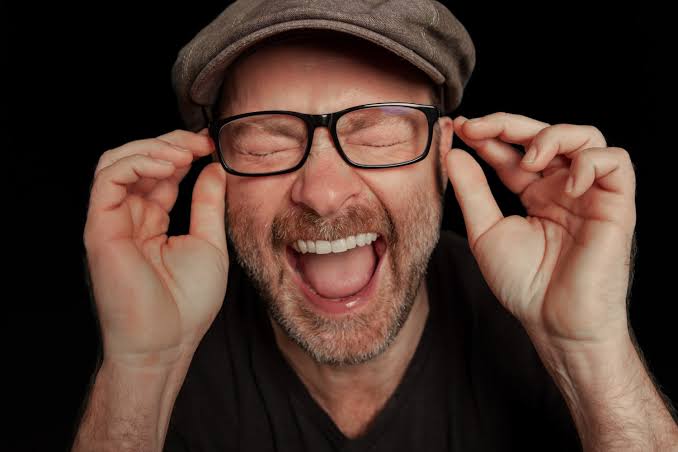
By Rupert Degas, voice actor
I had the radio on in the car the other day, and by the end of my 90 minute drive I couldn’t tell you one single thing about one single voice I had heard in the ad breaks. Not an age. Not a region. Not even whether I’d shared a booth with any of them. The voices were so forgettable, it was like trying to recall individual shades of beige.
Well, that’s not entirely true. To be fair, a spot did come on that was read by a bloke who was very obviously from Western Sydney. And for about six seconds it was the most interesting commercial I’d heard. But then he hit the second sentence, and it all fell apart. Because knowing what postcode you’re from isn’t the same as knowing where to put the emphAHsis. The guy clearly couldn’t sight read, poor chap. Somebody hired an accent and forgot to hire a reader.
I bring this up because a few weeks ago a pretty decent piece of research came out of the UK. You might have seen it. It was a proper sampled study, with real brands and real audio ads, with human reads tested against AI ones. And they landed pretty much in the same ballpark. They moved the needle the same amount, and on some measures the AI voice even came out ahead on audience attention.
I’m not going to do myself any favours here, but it seems the data would suggest that if you need a clean retail voice-over announcing a sale – use AI. It’s not only cheaper, but nobody listening can tell the difference anyway. To all the voice-over artists out there still insisting the ears know the difference, you’re describing a world that’s already packed up and left the building.
But… there was something else in that study, further down, that nobody’s talking about.
They didn’t just test human against machine. They also tested a ‘neutral’ AI voice against AI voices with regional accents, matched to where the listener actually lived (Geordie, Scottish, Yorkshire, and Welsh), and the accented reads were roughly three times better at getting people to say they would recommend the brand. Three times better!
Which means the research everyone’s banging on about as proof that AI voices have caught up with human voices, is also, in the same document, proof that neutral voices are getting dismantled by specific ones. That’s not a tech problem. That’s a casting problem.
So our industry offers two ways of solving this, and I’d heard both of them before I got out of the car – generic but competent like the ones I couldn’t remember, or specific but flat like the one I wanted to forget. And then we look at the research and wonder why nobody remembers ads any more.
Several times over the years I’ve been called in to re-record a ‘real’ person. They’d cast someone authentic, but the read was unusable. So they’d get me in to mimic him, and that’s the version that went to air.
More recently I’ve been asked to imitate AI voices. An agency has generated a guide read, which everyone in the room privately thinks sounds like a man reading the phonebook in the bath, but somewhere in the process the client has fallen for the flatness, so the brief is to reproduce it – but with lungs.
I’ve basically gone from impersonating people who can’t read, to impersonating machines that can’t feel. And none of those was ever a wasted booking – far from it. The real bloke and the machine both found something nobody had thought of. They just couldn’t deliver it effectively, which is a different job – and the one nobody costs in.
I need to be careful here, because I’m not saying I’m authentically Scottish, or authentically American, or Irish, or Scouse, or even French. Nobody can realistically grow up in nine places, and I’ve never pretended otherwise. But I can be believed in all of them. And that’s a completely different thing.
I did a session recently and we recorded the same script as a Belfast publican, an East London hit-man, a New York Italian gangster, a Spanish lothario, and something the copywriter could only describe as “sort of Sean Bean but darker.” One booking. One hour. At some stage the creative director said “can we mix the accent of the Antonio Banderas one with the intensity of the Liam Neeson one?” and that was the ad. It wasn’t in the brief. The brief was simply “menacing tough guy”. But we got there because the people in the session were all contributing ideas, and using shorthand we all understood. The hard part wasn’t coming up with ideas. It was somebody in the room saying “that one!”
So I guess you could say I’m a human jukebox. Put in a coin, ask for whatever you like, and out it comes. The obvious retort is “and that’s precisely what AI does” – and for the bargain price of a servo sandwich! Fair enough. Except a jukebox only ever plays what you ask for. What you’re actually paying me for is the moment the jukebox looks up and says, “Have you heard this one yet?”
Range gets you in the door. Judgement is how you stay.
Look, I get it wrong constantly. The difference is I get it wrong out loud, on mic, at speed. And somewhere around take twenty, when we’ve tried everything, somebody usually says “actually, go back to the first take.” That’s not a waste of an hour or two, that’s how a room finds out what it wants.
Which brings me to money, and to a sentence I’m hearing more and more, always cheerfully, and always from people I like. “AI’s amazing. We knocked it out in ten minutes.”
And they had! I have absolutely no doubt the ‘generating’ bit took ten minutes. But what about the three, four, or six hours before the ten minutes? All those hours nobody mentions? Because somewhere in the process, a person sat down with a script and a text box and began typing instructions to a machine. ‘Warmer’. ‘Not that warm’. ‘Slower on the second line’. ‘No, that’s made the third line odd now, put it back’. ‘Try it with a comma’. ‘Try it without the comma’. ‘Can you make the breath more natural?’ And on it goes, in that particular way all AI iteration goes, until something emerges everyone can kind of sort of live with, and that last ten minutes is the number that made it into the meeting.
On AI subscription costs there’s no contest – and I’m not going to embarrass myself staging one. The tools cost less per month than a half-decent lunch, so that’s not a fight I’m going to win. The fight is about hours. You know what an hour of your creative director costs. You know what an hour of your producer costs. Or your copywriter. None of them was hired to spend the day typing prompts into a box and listening back to a machine getting warmer. At least I hope they weren’t.
All of which leads me somewhere uncomfortable, so I may as well say it. The threat to voice-over artists isn’t AI. It’s that a great many of us have been doing an impression of one for years.
You know the type. They arrive, they’re perfectly lovely, cans on, clear of the throat, sip of water, and they say “how would you like me to read this?” And they wait for your direction. “Make it a second quicker.” “Ok”. “More of a smile.” “Ok”. “Sell the brand but throw the last three words away. Not the whole line, just the last three words.” “Erm yeah, sure, I can do that. What was the middle bit again?” All good direction, all beautifully executed, and every single instruction could have been typed into a prompt box.
So if what you’re buying is compliance, why pay a human when you can feed the machine? Compliance is compliance. The machine does it faster, cheaper, and never needs the middle bit repeated.
But what you can’t get from either is judgement. There’s no course for judgement, and no showreel that proves it. Judgement comes from having been in the room when it went badly, and having had to fix it while everybody watched.
So the question is no longer human vs machine. That framing is dead and buried now. The question is which tier is the job in?
For functional, inoffensive work, across twenty markets? Use AI. Seriously. Knock yourself out, and enjoy your Friday afternoon. But for work that has to stop a thumb, or make somebody feel something? That’s not a procurement decision – it’s a creative one – and the evidence now suggests the safe neutral option is the one that quietly loses.
Which leaves you needing a voice that is specific and interesting, and a person who knows what to do with it. Almost everywhere, those are two separate hires. Occasionally though, and delightfully, they can be one.
Time it once. Put the prompting on a timesheet for a single campaign, and then let’s have the conversation properly, with both numbers on the table.
I’m fairly relaxed about what you’ll find.
Rupert Degas has spent thirty years being from places he has never lived. He has voiced thousands of campaigns without once being invited to a strategy meeting.
Website: https://rupertdegas.com/
YouTube: https://www.youtube.com/@rupertqsound
Instagram: https://www.instagram.com/rupert_degas/
Substack: https://rupertdegas.substack.com/
Register for FREE HERE and receive the Campaign Brief Daily Bulletin and/or the global Best Ads Best of the Week Bulletin. Subscribe to Campaign Brief Magazine.
#More Creative News #No paywalls #No annual membership fees
Subscribe to Portfolio & Reel for current listings of Australian and NZ ad agency and production company leadership and key personnel.