Sound+Music in 2026: human craft, creative judgement, collaboration become the premium
Australia’s commercial sound and music industry is navigating a paradox in 2026. There is more content, more technology, more platforms and more opportunity to make sound part of the creative idea – but there is also more pressure on budgets, timelines and production resources. Campaign Brief takes a closer look…
Across the industry, studios are being asked to deliver more formats and more versions, often faster and for less. AI is now part of the production conversation and, increasingly, the workflow. Social, immersive, experiential, branded entertainment and sonic identity are widening the field beyond the traditional TVC. International collaboration is becoming routine. And yet, amid all that change, the fundamentals sound remarkably familiar: strong ideas, experienced creative judgement, curiosity, collaboration and craft.
If there is a defining theme in this year’s Sound+Music report, it is that technology may be making competent audio easier to produce, but distinctiveness is becoming harder – and therefore more valuable.
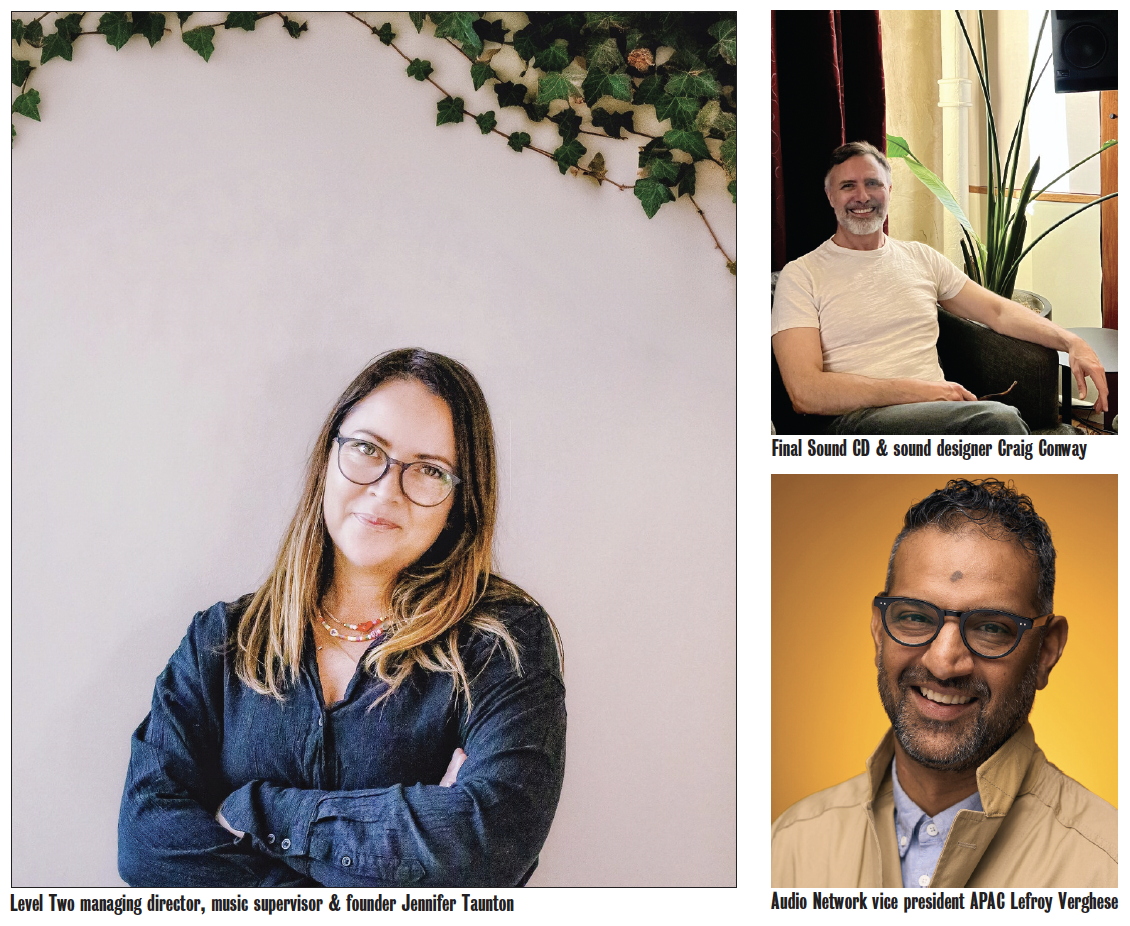
Final Sound creative director and sound designer Craig Conway captures the tension neatly: “There’s probably never been more content being made, with an emphasis on shorter formats and an obscene number of deliverables, immersive experiential briefs along with larger scale projects and there’s also never been more pressure on everyone to make it faster, cheaper and somehow better than the thing we made last Tuesday.”
At Level Two, managing director, music supervisor and founder Jennifer Taunton sees similar pressure without a corresponding decline in ambition: “We’re definitely operating in a more cost-conscious market, but I don’t think the creative ambition has reduced with the budgets. If anything, expectations are higher. Clients still want something distinctive, culturally relevant and memorable, they just need us to find smarter ways of getting there.”
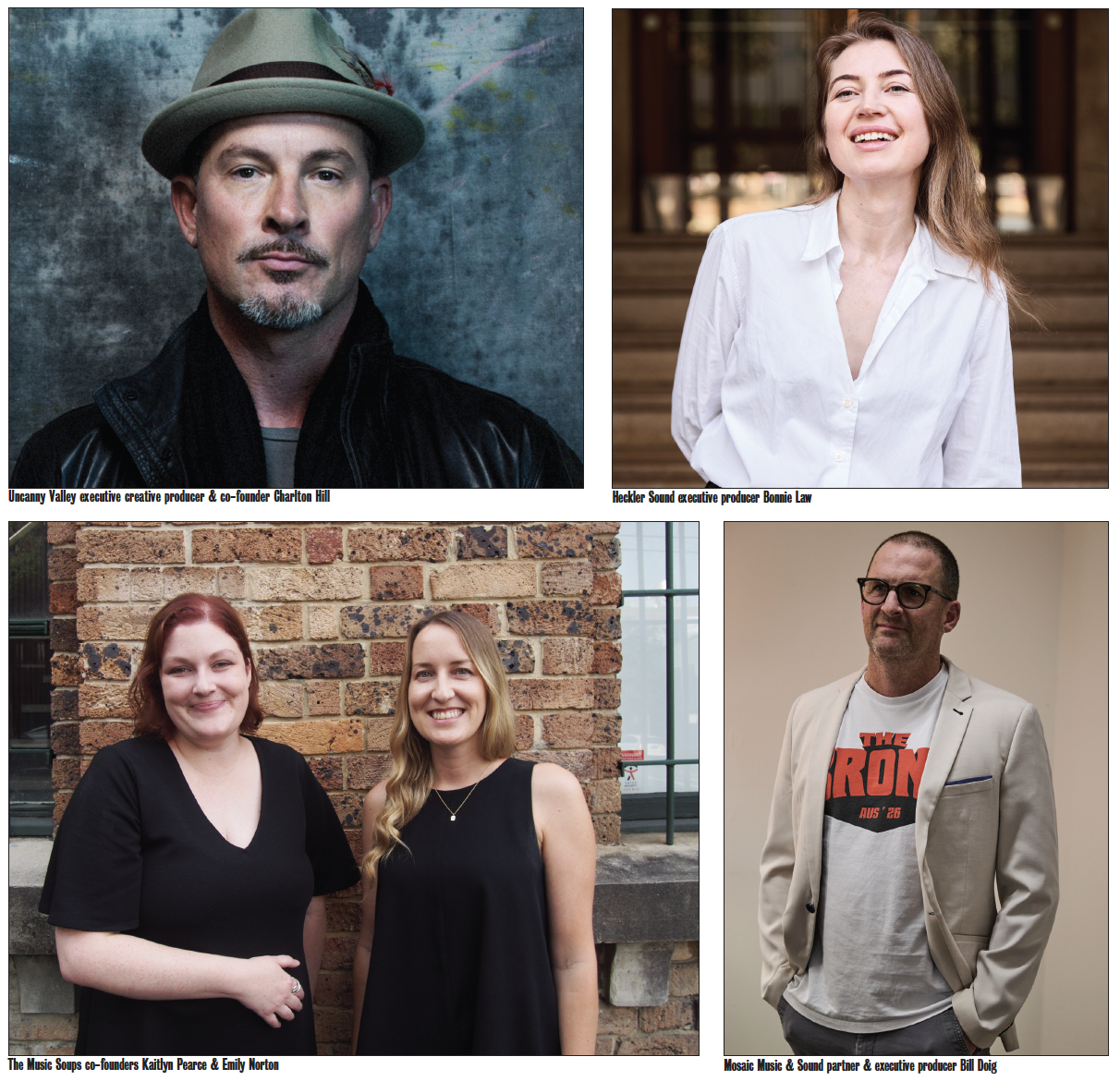
For Uncanny Valley executive creative producer and co-founder Charlton Hill, the disruption itself may be useful: “The Australian music and sound industry feels incredibly dynamic right now. There’s an extraordinary amount of content being made, and it’s inspiring to see how inventive creatives can be in an increasingly crowded and tech-integrated market.”
The Music Soups co-founder Kaitlyn Pearce is similarly upbeat about the market: “Australia’s music supervision industry feels creative, fast-moving and full of opportunity. What’s surprised us most over the past year is the pace of change across technology, media and social. Campaigns are increasingly moving beyond linear TV into VOD, streaming, social, platform-specific content and UGC, creating more opportunities for music to connect with audiences in different ways.”
Audio Network vice president APAC Lefroy Verghese sees rapid change being driven by AI, while human originality becomes more valuable: “Australia’s commercial sound industry is changing quickly, particularly with AI starting to reshape how music and sound are created and used. What’s surprised us is how quickly these tools have become part of the creative conversation but also how much people still value the human element. With so much AI generated music out there, originality, emotion and real creative input feel more important than ever. For us, it’s about continuing to support the real composers, artists and musicians who bring music to life.”
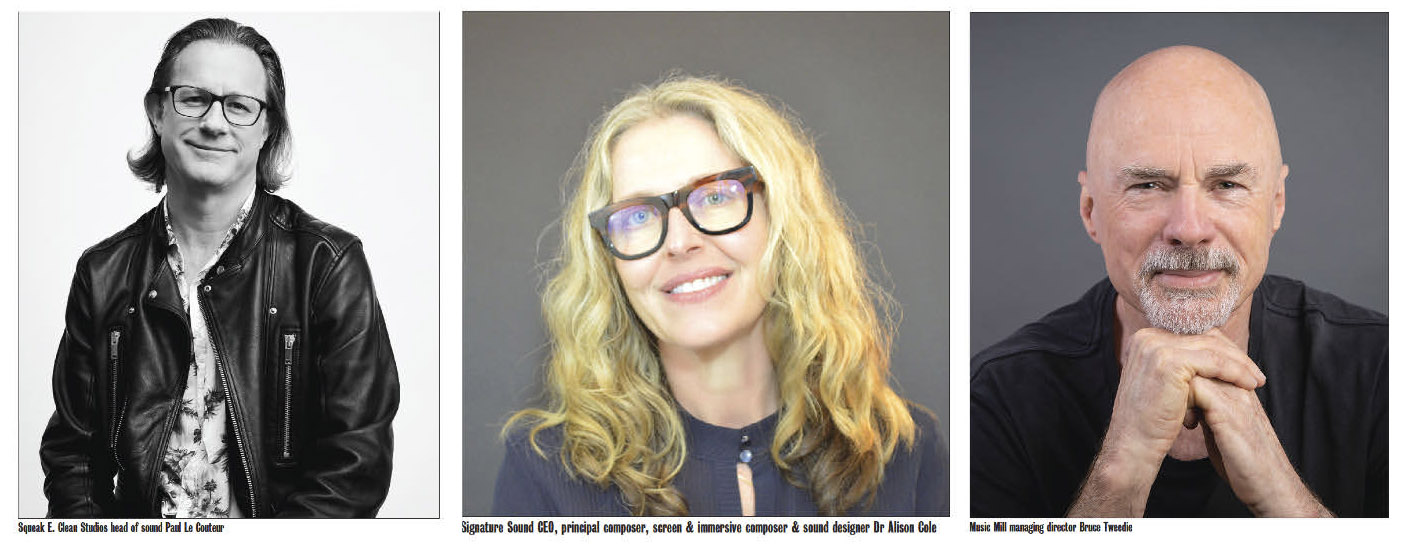
Squeak E. Clean Studios head of sound Paul Le Couteur also believes the continued amalgamation of advertising agencies into global marketing structures and giant holding companies has certainly influenced the landscape of commercial advertising overall. “Many Australian agencies are running leaner than ever, and lower budget and retail work are continuing to be brought in house to mitigate costs.”
Judgement remains human
Studios are using AI-assisted technology for administrative work, dialogue cleanup, search, file organisation, experimentation and workflow efficiencies. But respondents draw a strong distinction between generation and creativity – and between producing possibilities and deciding which possibility is right.
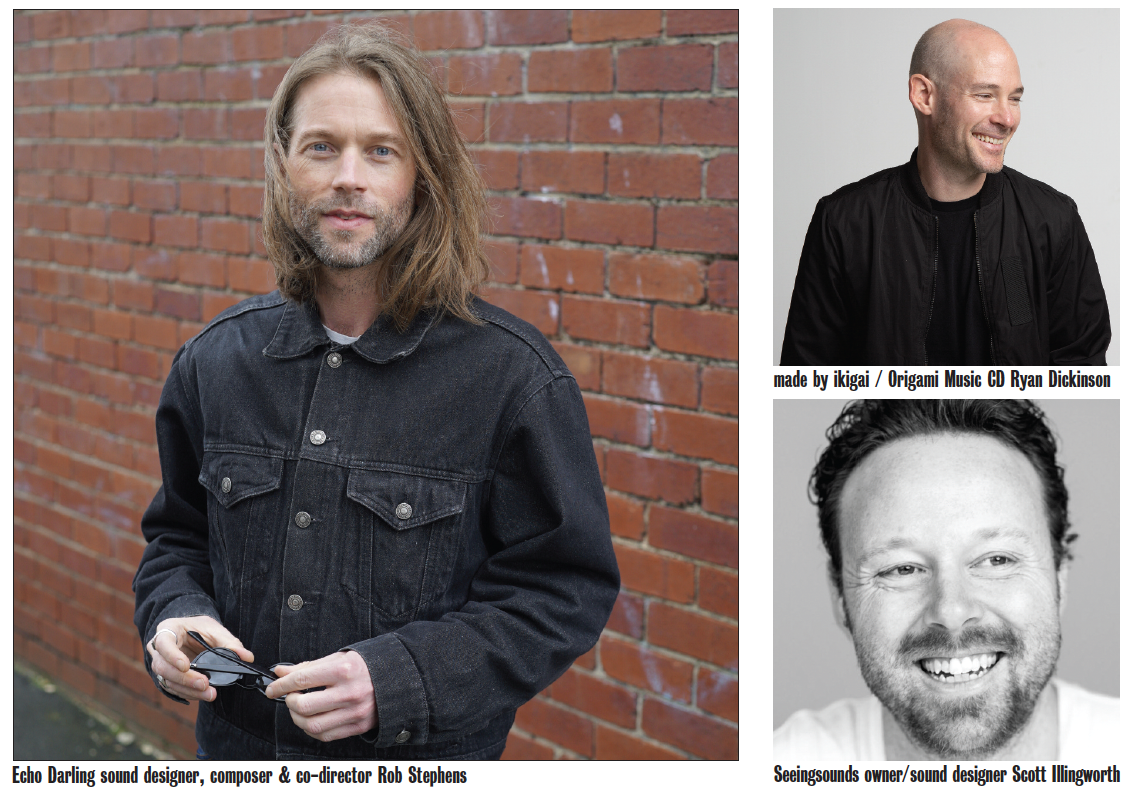
Ryan Dickinson, founder and creative director, made by ikigai / Origami Music, says it has influenced almost everything in his workflows, except the creative. He explains: “That’s not to say it can’t be an effective tool in those areas, but I believe it’s everyone’s choice as to how and where AI supports or replaces humans in our day-to-day tasks. For us, we prefer to let it handle the things we enjoy less like bookkeeping and project management, so we can be free to do more of the things we like.”
Conway is comfortable putting AI to work on the mechanical load: “AI is already integrated into our workflow, has been for some time, and I’m pretty happy about that if it means it takes some of the grunt work off my hands. If it wants to clean up dialogue, organise files or generate twelve weird and potentially cool texture ideas before lunch, crack on.”
But he is equally clear about where its limits sit: “Human creativity will never be substituted by AI. AI can give you a mountain of options, but it doesn’t necessarily know which one is right for the story, the brand or the moment.”
Signature Sound CEO, principal composer, screen and immersive composer, and sound designer, Dr Alison Cole makes a similar distinction: “AI can generate possibilities. Human creativity gives those possibilities intention. And, as generative content becomes more ubiquitous, I think distinctiveness and creative judgment become more valuable, not less.”
For Seeingsounds owner and sound designer Scott Illingworth, AI is another addition to an already expansive audio toolkit. “AI doesn’t replace the creative thinking behind the work. The exciting part is still deciding what the audience should hear, why they should hear it, and how it should make them feel. AI can help us get there faster, but the creative instinct behind the idea is still human.”
Mosaic Music & Sound partner and executive producer Bill Doig flips the question around: “I like to think we are influencing AI’s workflow rather than the other way around!”
His studio is using AI more heavily around workflow than generation, arguing that deep musical knowledge and elite sound-design instincts remain essential regardless of the tool: “It’s been fun, challenging, and inspiring. We are using it more for workflow tools than generative, but that’s mainly because we are good at what we do. It’s worth remembering, AI learns from what we ask of it.”
Hill takes a similarly pragmatic position. “There’s a lot of hype, but the train keeps moving. AI is affecting everything we do, from process to opinion, and it’s ultimately up to the individual how much they choose to rely on the tools.”
For Taunton, the opportunity is to give humans more time to do the interesting part. “I’d much rather use AI to give us more time to explore ideas than use AI to have the ideas for us.”
At The Music Soups, Pearce says AI is most useful behind the scenes: “We use AI to streamline our workflow and manage the back end of the business, and it’s been a really useful tool for making processes more efficient. But when it comes to music supervision, the human element remains essential – understanding the creative brief, having the industry relationships, knowing what will work for a brand and navigating the nuances of artists and rights holders still requires experience and judgement. AI can help us work faster, but the creative thinking and relationships remain human.”
At Audio Network, Verghese also positions AI as a support tool rather than the source of the creative idea: “Currently we use AI mainly as a support tool, such as our search. This keeps workflow fast, but all the real creative work stays entirely in human hands. AI can handle repetitive tasks, but it can’t feel the true emotion or connection of a client’s story. Only human composers can bring the true feeling and unique perspective needed to make a commercial soundtrack really resonate with an audience.”
Music Mill managing director Bruce Tweedie is fascinated by the speed of development. He says AI has already transformed mechanical processes, yet music supervision remains protected, at least for now, by the unpredictable human and commercial variables involved in matching a song to a campaign: “What still seems to be protecting us is that every request for a song is different to the last one – the brand, the media usage, the weird innovative uses of music, the people involved, the twists and turns, the unpredictability of the rights owners.”
Le Couteur adds AI is collapsing the cost of producing content, so clients can make more versions in more formats. “The fragmentation of content can often be glued back together by signature sound design, sonic branding and music. That is an opportunity for agencies to mindfully connect these disparate formats with sound that is crafted, curated and memorable.”
Stretching budgets
Efficiency begins with the process, says Echo Darling sound designer, composer and co-director Rob Stephens: “Tighter budgets do not have to result in substandard work. Clear briefs, locked assets, clients available for feedback, these are some of the elements that once aligned can result in high-quality work without lost time. Efficiency is key.”
At Signature Sound, Cole argues that premium does not necessarily mean large-scale: “Premium doesn’t necessarily mean bigger. One beautifully recorded instrument or a distinctive sonic gesture can create more identity than a huge production that sounds interchangeable with everything else.”
Conway makes the same point: “You don’t necessarily need an enormous recording session, a 90-piece orchestra and a recording budget that requires a small government grant to make something sound premium. Sometimes one really good creative decision is worth far more than throwing resources at everything.”
His warning is that efficiency cannot become an end in itself: “Efficiency is useful. But efficiency without taste just gives you something that is efficiently mediocre.”
Hill agrees: “The danger is when efficiency becomes the creative strategy rather than simply part of the production process.”
At Level Two, budget limitations can sometimes encourage more adventurous music choices. Taunton says: “Sometimes the famous track isn’t the best answer anyway.”
That can open the door to emerging artists, Australian catalogues, re-records and unexpected alternatives – provided music specialists are given enough time to explore them. “The hardest brief isn’t necessarily the one without enough money. It’s the one without enough time to find another way.”
Pearce sees the same pressure producing more deliberate choices: “We’re seeing brands become much more considered about how they use their music budgets. Shorter campaign durations, carefully assessing where and how campaigns will run, and exploring creative alternatives are all part of the conversation.”
Verghese says brands are concentrating spend on the assets that matter most: “We see that many Australian brands are balancing tight budgets by spending smarter on key creative assets. Rather than cutting back on original music, agencies are investing in core custom elements. Our aim is to help agencies stretch tight budgets by offering high-quality, pre-cleared music instead of costly full custom scores.”
Tweedie’s answer is similarly practical. Music Mill’s role, he says, is finding commercially released music that offers quality within the actual budget, backed by knowledge of rights and availability that an algorithmic playlist cannot provide.
“What makes it work is the global panel of publishers and record labels we have painstakingly built over the years, from the majors through to tiny little shops in Nashville. They know their catalogues, and they pitch songs to us to fit a budget.”
For Doig, the answer is to direct available resources towards the elements that matter most. “There’s no question that sonic awareness translates into emotional brand connectivity on a deep level, so like all production, it starts with clever creative leadership and spending the budget where you need it, I guess.”
Adds Dickinson: “When music or sound isn’t at the centre of the idea then brands will take whichever path gets them to a satisfactory result within budget, which doesn’t always give the best results but is a necessity and fact of business sometimes.”
Beyond the TVC: sound escapes the frame
The commercial sound industry’s opportunity is increasingly difficult to define by medium. Social, gaming, immersive installations, branded films, podcasts, live experiences, sonic identity and artist partnerships are crossing into one another.
At Heckler Sound, executive producer Bonnie Law points to immersive work as one of the most exciting areas because it changes the role of sound itself: “We’re seeing growth across sonic branding, digital content and immersive work, but immersive is especially exciting because sound becomes part of the experience, not just something that sits behind the picture.”
Heckler’s TIME:WARPED project for Vivid Sydney illustrates the potential. Law explains: “Housed in the heritage-listed Argyle Cut tunnel, TIME:WARPED saw our composer Mitchell Sloan write and produce a continuous eight-minute original score built across six distinct chapters, taking audiences from ambient stillness through to full-throttle hardstyle.”
For TIME:WARPED, sound didn’t follow the visuals – it led them. Says Law: “Mitchell Sloan’s score was written before a single visual was locked, with Neon-Dynamo developing the visual narrative in response to the music. Our sound supervisor, Dave Robertson, also recorded an impulse response of the Argyle Cut itself, capturing the tunnel’s unique acoustic fingerprint and using it to shape reverb and delay throughout production. It was a genuinely site-specific approach that pushed us both technically and creatively. This was our second year working with Vivid Sydney and NeonDynamo, and that trust gave us the freedom to go somewhere sonically unfamiliar.”
Seeingsounds is finding similar opportunities in interactive work. Says Illingworth: “What’s exciting is that sound isn’t just supporting the picture anymore. In immersive and interactive work, sound will help shape how someone moves through and responds to an experience.”
Cole sees the disappearance of boundaries between advertising, entertainment and experience as fertile creative territory, particularly where cinematic composition and sophisticated sound design can be applied to branded and experiential projects. She says sonic branding is also becoming more compelling.
“For us, the opportunity isn’t simply creating a three-second logo; it’s developing a sonic vocabulary through instrumentation, texture, voice, and musical identity that audiences can begin to associate with a brand across multiple experiences.”
For Hill, diversity of format can improve the craft itself. “Moving between a series, an artist release, a sonic identity, a live show, social content or something completely immersive keeps you curious – and quite often an idea or technique from one world unexpectedly finds its way into another. That cross-pollination of craft is probably what excites me most.”
For The Music Soups, long-form television is another area of growth. Says Pearce: “Long-form television is creating some really exciting opportunities for music supervision, particularly as streamers continue to commission more original productions. We’re seeing a growing need for music supervisors who can manage the creative and licensing requirements across an entire series, rather than just a single campaign. It’s a really exciting area and one where we expect to see continued growth.”
Doig nominates social content involving brands and content creators and branded mini-dramas among Mosaic’s most interesting recent opportunities, while Taunton sees artist-brand partnerships as an important evolution for music supervision.
Says Taunton: “We’re increasingly looking at what happens when you start with the artist rather than start with the sync. That could become content, live performance, social, an experience or something we haven’t defined yet.”
Le Couteur is also seeing social content crossing many genre and platform boundaries that give enormous variety and creative scope for commercial sound engineers. He also nods to opportunities in sonic branding and podcasting: “Sonic branding can mean a three-second mnemonic or a whole audio brand identity, encompassing many elements, so there is an enormous scope for emotional, musical and tonal considerations. And, opportunities in podcasting are still evolving as it looks to take on more share from traditional broadcast radio platforms.”
For Tweedie, even the traditional business of advertising music licensing now stretches across an expanding range of media, from digital, out-of-home to user generated content and influencer posts: “I would hesitate to say that the ever-increasing complexity is an ‘exciting opportunity’, but it sure keeps us busy – it can take months to nail down the final usage terms.”
Collaboration gets faster – and earlier
“Collaboration is more important than ever,” says Stephens. “specially with budgets under such pressure. Bringing the sound house in early in the process can help create opportunity. Honing in on sound and music direction early on can help with the tone setting and broader themes, as well as managing client expectations.”
For Conway, the old sequential model – agency, production, edit, sound – is giving way to something more integrated. “When sound is involved during the edit, or even before the shoot, it becomes much more collaborative. A piece of music can influence the edit, a sound idea can change a shot, and occasionally you discover the best idea was hiding in the audio all along.”
Taunton is equally unconvinced that the industry needs an elaborate new collaboration model. “Music can affect an edit. An edit can completely change what music needs to do. A licensing conversation can open up a creative alternative nobody had considered. I don’t think collaboration needs a new model. It mostly needs people talking to each other earlier.”
Despite the convenience of remote work, she remains an advocate for face-to-face creative exchange, where an unexpected suggestion can send the music search somewhere entirely different.
Verghese says the search for less obvious music choices is also making open dialogue more important: “We’re seeing collaboration become much more open with agencies, editors, directors and production teams looking beyond the obvious music choices to find something that gives a campaign its own identity. At Audio Network we’re seeing more demand for that ‘wild card’ track, the unexpected piece of music that can make a project stand out.”
Illingworth has seen the relationship between editors and sound studios become more direct. “The best part of our job now is having video editors come into the sound studio and collaborate with us. Being in the room together while we tighten the picture edit and sound really helps us find opportunities that we can then present to the client together.”
Le Couteur has also seen a gradual return to the studio after the drawn-out approval processes associated with the post-Covid hybrid era, with better communication translating into greater efficiency and creative flow.
Doig, meanwhile, says remote tools have made collaboration more fluid to the point that high-level international jobs can sometimes be briefed and reviewed through WhatsApp. He says the important thing is preserving direct access between creative people.
“There is much more fluidity these days between all collaborators on any production, which is why here at Mosaic, we’ve intentionally set us up to give our clients direct access to supreme talent, which really helps the creative process by removing the old ‘traditional gatekeeper’ structure.”
Adds Dickinson: “There are less rules around who does what these days. With the pipeline condensing and people having new tools or larger ranges of responsibilities, you tend to find that the music or sound direction can come from just about anyone.”
Hill sums up the trade-off: “Tools and workflows will keep evolving, but giving talented people the space to talk, experiment and challenge each other is still where the magic happens.”
The next generation: curiosity before software
Conway puts curiosity first. “You need to listen. Listen to music, films, documentaries, games, podcasts, records, terrible advertising, great advertising, the world around you. Figure out why something works.”
Taunton also nominates curiosity as the defining skill in music supervision. “Technology will make knowing how to find things easier and easier. Knowing what is worth finding is a different skill.”
Stephens believes adaptability is increasingly critical because audio practitioners are already moving between highly different roles. “In one week, I could be writing music for an ad campaign on Monday, managing a room full of clients on the Tuesday, then recording ADR on the Wednesday.”
He says while these jobs all require a similar set of technical skills, the challenge is altering the kind of engineer you need to be to run these sessions: “From intuitive and solely creative, to social and collaborative, to head-down technical and thorough.”
Dickinson predicts that talent who can develop strong relationships are going to be best placed for whatever the landscape looks like in the next 10 to 20 years.
“People that can identify problems for clients before they happen and address them ahead of time, build trust and rapport, and be someone the clients enjoy interacting with is going to be one of the biggest assets anyone can bring to the table.”
For Cole, future practitioners will require fluency across DAWs, recording, mixing, synthesis, immersive audio and AI-assisted workflows, but those skills will become baseline rather than differentiators: “Software changes. Great ears and great judgment don’t.”
Pearce likewise sees adaptability as essential: “As technology and AI continue to evolve, I think it’s imperative that the next generation stays across new tools, trends and ways of working, particularly where they can help streamline workflows. Creative thinking will remain incredibly important, but the way those ideas are executed will continue to change. The strongest talent will be those who can combine creative instinct with an understanding of technology and an ability to adapt quickly.”
Verghese also puts adaptability alongside technical skill: “I think the next generation of sound designers, composers and audio directors will need to be incredibly adaptable. The ability to think outside the box, respond to change and find creative solutions is becoming just as important as technical skill, particularly as new tech changes the way we work.”
Doig says the industry still needs to invest time in nurturing young talent, fostering good taste and giving people meaningful experiences. “And listening! That is still a key skill.”
Tweedie highlights a particular problem in music supervision: it sits between the music and advertising industries, neither of which specifically trains people for the role. Music Mill therefore chose to develop its own supervisors over a period of years.
“We found Cassie Cannon, who came with extensive music industry experience, and McKenzie Roberts, who was pretty much straight out of music college. Both are now highly accomplished senior music supervisors, but that took years rather than months, because the art is genuinely complex. Unfortunately, though, the music supervision niche is so specialised that entry-level job opportunities are few and far between.”
At Squeak E. Clean Studios, Le Couteur says storytelling remains the central requirement. Emerging practitioners need opportunities to experiment with technology, international connections and creative collaborators while building confidence in their craft.
“Australia has an incredible pool of talent, and creating opportunities for those voices to grow is a big part of moving the industry forward.”
Hill believes smaller studios will continue to value all-rounders: “Craft and technical ability are obviously essential, but curiosity, adaptability and being someone you genuinely want in the trenches with you counts for a lot.”
There is also concern that AI could remove some of the entry-level tasks through which previous generations learned.
Illingworth points specifically to voice performance: “Every project, client pitch, animatic or submission that’s voiced by AI is potentially an opportunity that could otherwise have given an actor valuable experience and helped sharpen their skills in the booth.”
Looking ahead
Over the next 12 months, the industry expects technology to keep accelerating, budgets to remain closely scrutinised and content demands to keep multiplying.
But the most important opportunity may come from precisely that abundance.
For Pearce, the opportunity is increasingly global: “I think the biggest opportunity is global campaigns and the ability to work more seamlessly across markets. Music is increasingly borderless, and we’re seeing brands looking for music that can connect with audiences internationally while still feeling culturally relevant.”
Verghese identifies both familiar constraints and a fast-moving creative opportunity:
“Challenges are always the things out of our hands. Budgets. Where people look for music in their creative journey (please get in early, as you get a far better result!). Communication and understanding music rights. Everything else we’re all pretty used to dealing with. We haven’t found a problem that’s stumped us completely – yet.”
Says Cole: “Competent audio will become increasingly easy to produce. Memorable sound will remain difficult to create.”
Her conclusion is a concise summary of the wider industry mood: “When everything can sound polished, identity becomes the premium.”
Tweedie sees a similar possibility in music. As generative tools increase the volume of cheap production music, he predicts that authenticity may become more valuable at the upper end of the market. “The more slop there is washing around in the bottom tier, the more likely that serious people will want to use serious music.”
Taunton worries that recommendation systems and generative tools could instead narrow creative choices by repeatedly returning variations on what is already familiar.
Her opportunity for music supervision is therefore to break the feedback loop: “I don’t want technology to make us faster at arriving at the same answer. I want it to give us more time to find the answer nobody was expecting.”
For Illingworth, preserving the human talent ecosystem – particularly performers – will be just as important as adopting the technology.
“Our advertising campaigns are only ever as good as the soundtracks we create and the actors we choose to voice our scripts. We’re incredibly lucky in South Australia to have some world-class stage actors, supported by some of the best theatre companies in Australia.”
For Doig, deep knowledge, senior creative talent and good listening will continue to matter. For Law, immersive and site-specific projects point towards sound taking a more active role in shaping experiences. For Le Couteur, navigating technical and cultural change requires constantly assessing the strengths and weaknesses of the tools entering the production process.
And for Hill, beneath all the change sits the same task the industry has always faced: “The biggest opportunity AND challenge is what it’s always been: creating authentic human moments through storytelling that connect with and move audiences. The tools will change, the formats will change, the industry will keep changing – but that’s the job.”
Standout work
The breadth of work nominated by the sound and music companies in this report reflects the increasingly fluid definition of commercial sound and music.
At Echo Darling, Stephens highlights Cancer Council Victoria’s ‘Hope Discovered Daily’, Suzuki eVitara’s ‘Good Clean Dirty Fun’ and Louis Vuitton’s ‘Victory Travels in Louis Vuitton’, spanning delicate human detail, playful sound design and high-speed live-event production.
On the latter he says: “This was one of those jobs that showed off our team and how nimble we can be when faced with tight turnaround times. The project was sound designing and mixing spots created with footage from the live events, for on-air – sometimes within 24 hours.”
Law nominates Heckler Sound’s Vivid Sydney TIME:WARPED NeonDynamo and Destination NSW work, GARUWA feature documentary Facing The Numbers and Chery T7 via Dentsu Creative – the latter built around an original yacht-rock track whose audience response led to a full-length version.
Facing The Numbers was a deeply collaborative feature project where Heckler Sound handled sound post-production, music supervision and music editing. Directed by Kieran Satour and Tyson Perkins, the film is a hybrid anthology blending memoir, music video, poetry, dance, journalism and activism, giving voice to the personal stories behind the statistics on Indigenous incarceration, family separation and deaths in custody.
Says Law: “What made it stand out was the sheer scale of the creative collaboration. We worked across seven different composers, weaving distinct musical voices into one cohesive emotional throughline while supporting GARUWA’s wider creative vision. Being trusted with material this culturally significant made it one of the most rewarding projects of our year.”
For Chery T7, Heckler Sound wrote an original yacht-rock track for the T7 campaign, leaning right into the spot’s comedy with an oversized ’80s ballad and soaring vocals.
“After launch, viewers began asking for the track online, generating the kind of organic engagement and virality brands hope for. The response was strong enough that the client commissioned a full-length version, showing how original music can take on a life beyond the campaign and extend a brand’s impact well beyond the original spot.”
At Level Two, Taunton points to Lifeblood’s Unstoppable, performed by Tina Arena and Ngaiire; Spark NZ’s use of the Alessi Brothers’ Seabird; and Sycco’s re-recording of Jamiroquai’s ‘You Give Me Something’ for MYER Christmas.
Commenting on Unstoppable, she says: “From the outset, this was an unforgettable, emotionally charged brief and we were honoured to be partners on this work to source standout talent and deliver a track that captures the artists’ and recipients’ resilience and strength. The result is the innovative ‘Unlikely’ version, which was shortlisted for a 2026 Cannes Lion in Audio and Radio, brought to life by M+C Saatchi and the team at MOFA.”
Pearce nominates three projects for The Music Soups. On Cadbury ‘Give A Cheer And A Half’, she says: “Cadbury are known for their tear-jerker campaigns, and this one was no different. We worked with a local sound house to craft a unique new take on the well-known Dido track Thank You. It was a great example of how a familiar piece of music can be reimagined to create something fresh while retaining the emotional connection of the original.” On McDonald’s ‘There Is A Drink For That’: “It was brilliant to work with a team who were keen to try something different in terms of the music and sound for this campaign. Landing on ‘Whats the Prob Dog?’. Juggling tight deadlines and international rights holders were the cherry on top.” And on Betcha ‘Here To Stay’: “We always love working with our New Zealand neighbours. Featuring the classic NZ footy chant Hey Na Na Kiss Him Goodbye, this use brought some real-life fandom to the ad world.”
Audio Network’s standout is Woolworths’ Christmas campaigns for 2024 and 2025. Verghese says: “Using a bespoke version of our track, ‘Almost Time For Christmas Day’ which was created for this campaign, we were proud to have run this for the past two Christmases across Australia and New Zealand.”
Mosaic’s Doig nominates the American Express Platinum World Cup campaign via Goodby + Partners NYC/Biscuit, Uber One via Special Group and Pizza Hut campaigns working with jrn.
For American Express, Mosaic handled multiple productions for numerous countries, including all original composition and sound design. “We wrote a key anthem track that fed into four bespoke country-specific tracks creating a sonic identity across the whole campaign running during the World Cup in Canada and North America.”
And for Uber One, he says: “Recreating a sci-fi fantasy world complete with laser beams and giant squids was a highlight owing to the creative foley, bold clients, and quality sound design.”
Tweedie’s Music Mill selections range from Judas Priest’s ‘Breaking The Law’ for Gippsland Yogurt via Special Group to The Kite String Tangle’s Boom for Grenade for the launch of the Grenade protein bar, by Dig Agency in Melbourne for Mondelez.
On Boom, he says: “It’s always great to see an emerging Australian artist picked up from our list of song suggestions.”
Lastly, he nominates The Veronicas’ 4ever, re-recorded as a 19th century romantic piece for the pairing of Netflix’s Bridgerton and Tinder, via Akcelo.
Cole highlights Signature Sound’s Disney+ screen composition, feature film Electric Feel and its commercial work at the intersection of sound design, screen composition, sonic identity and immersive experience: “Our recent Disney+ work has been particularly rewarding because longer-form screen composition requires you to think about musical identity across an entire narrative rather than individual cues.”
On composing Electric Feel she says: “It has allowed us to explore the relationship between music, sonic texture, character, and narrative in much greater depth. Feature scoring teaches you to think about consequence: a musical idea introduced almost imperceptibly early in a film can acquire completely different meaning when it returns later.”
At Squeak E. Clean Studios, Le Couteur nominates Australia Post campaign Postcodes, films for Red Tractor and music track Sour Patch Kids — work that ranges from highly location-specific Australian soundscapes to real-life farmer voices and a hip-hop-driven 90s aesthetic.
Uncanny Valley’s Hill selects Paramount+ Global’s animated Mountain Goat, Warner Bros. International Television Production Australia’s Run and TMRW Music Group’s Ministry of Sound Classical 2026, demonstrating a similarly wide range across global branding, television drama and live orchestral performance.

VIEW THE PRINT MAGAZINE + PAST ISSUES ONLINE. SUBSCRIBE NOW.
Register for FREE HERE and receive the Campaign Brief Daily Bulletin and/or the global Best Ads Best of the Week Bulletin. Subscribe to Campaign Brief Magazine.
#More Creative News #No paywalls #No annual membership fees
Subscribe to Portfolio & Reel for current listings of Australian and NZ ad agency and production company leadership and key personnel