Rupert Degas: Do you mind if I try something?
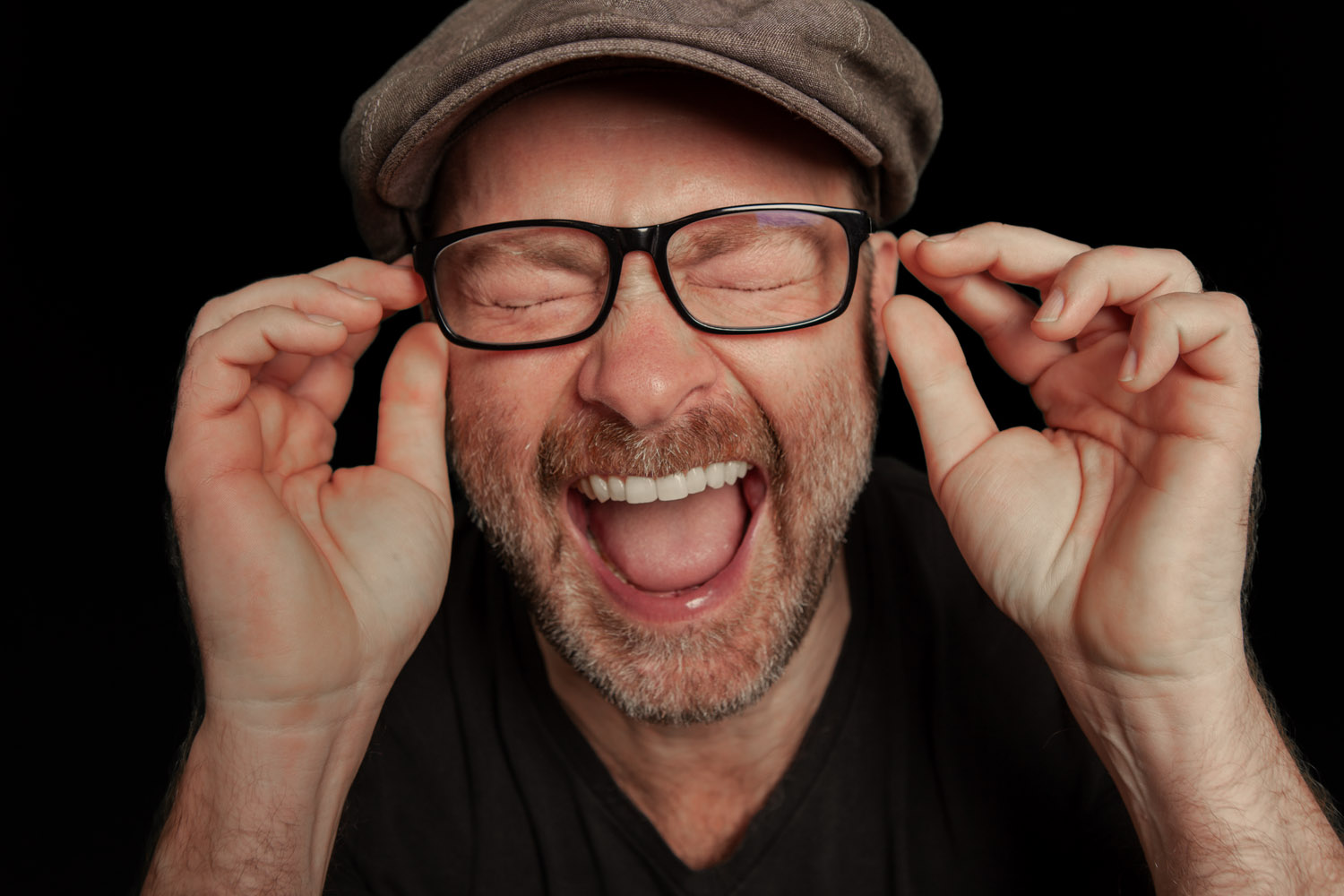
By Rupert Degas, voice actor
There’s a hierarchy in advertising production that nobody talks about but everybody knows. The strategy gets months. The creative gets weeks. The director gets wooed over dinner. The edit gets a suite with a fridge full of oat milk and three flavours of kombucha. And then, usually on a Thursday afternoon, someone says, “Oh we should probably book the VO.”
I’ve been that Thursday afternoon phone call for three decades, and I want to be clear – I’m not complaining. Honestly, it’s been a career advantage. When you’re the last person to touch the work, you have a disproportionate say in whether it flies or face-plants. It’s like being the bassist in a band – nobody notices you until you play the wrong note, and then suddenly you’re the most important person in the room.
But I do find it funny that an industry built on storytelling treats the storyteller as a line item. And I don’t think that’s anybody’s fault. It’s just how the machine works. By the time a campaign reaches the booth, everyone involved has already been through months of strategy, creative development, client revisions, more client revisions, a round of “let’s just check with legal” and whatever it is that happens in procurement. By Thursday, everyone’s spent. The VO booking isn’t an afterthought because people don’t care. It’s an afterthought because everyone’s bloody exhausted.
Which is a shame, because Thursday afternoon is often where the magic is hiding.
Here’s what thirty years of listening to briefs has taught me – the brief almost never describes what the brand actually needs. It describes what nobody could possibly object to. “Warm but not too warm” isn’t a direction, it’s a weather forecast. “Authoritative but approachable” – you’ve described every newsreader since 1974. “Conversational but articulate” – thank God you specified, I was planning on mumbling! But I totally understand why briefs end up like that. I’ve sat in enough sessions to know that the people writing the copy usually had something braver in mind before the committee had its way.
We’ve all been in that room. The script started sharp. Then someone worried it was too sharp. Then someone suggested “softening the tone.” Then legal had a note. Then the client had a thought. And by the time it reaches the booth, and a script is thrust into my hands, every interesting word has been sanded down and replaced with something rounder and safer. The script hasn’t been written, so much as survived!
I want to be clear – that’s not a criticism of anyone in the chain. It’s simply what happens when a piece of communication passes through twelve sets of hands before it reaches a ‘mouth’. And it’s precisely why what happens in the booth matters so much more than people think.
I remember a session – automotive, new model launch – where the creative team had been through so many revisions that the script had lost whatever personality it once had. Perfectly constructed sentences. Every product feature accounted for. Not a single reason to keep listening. I read it as written. Everyone nodded. “That’s great,” they said, in that particular tone that means “that is absolutely fine and we have all lost the will to fight for anything better.” Then the copywriter, quietly, almost apologetically, said: “The thing is, we wanted it to feel like the car was in on the joke. Like it knows it’s a bit flash. But that got lost somewhere around revision four.”
“Brilliant”, I thought, “now I’ve got something to work with!” The copywriter gave me the most useful kind of direction there is – an honest one! We spent the next twenty minutes finding something that had swagger without taking itself seriously. A voice that says “yes, this is a very expensive car, and yes, we both know that’s slightly absurd.” The client loved it. The creatives were relieved. And it only happened because two people in a room trusted each other enough to say “this isn’t there yet.”
Those moments don’t come from the brief. They come from human connection. They come from that fresh set of eyes and ears on a Thursday afternoon. They come from the conversation that happens when the brief runs out of ideas and everyone starts being honest.
Sometimes, inevitably, it goes the other way. I did a session for a health insurance brand where I was convinced – absolutely certain – that the read needed more edge. More personality. I pushed it, did several takes with what I thought was a wonderfully dry, knowing tone. The producer listened, paused, and said, very gently: “Rupert, these are people who’ve just been diagnosed with something. They don’t want to be winked at.” She was right. Completely, embarrassingly right. The final take was the simplest, most unadorned read of the lot. No performance. Just clarity and calm. It sounded almost dull. But it was better than anything I’d been reaching for, and I wouldn’t have found it without someone in the room who understood the audience better than I did in that moment.
That’s the thing about good sessions. They’re not about one person being brilliant. Or about egos. They’re about everyone in the room contributing. The producer who spots something. The copywriter who says “what if we just cut the second line?” The engineer who plays back a take you’d dismissed and says “listen to that pause.” My job in those moments isn’t to be the cleverest person in the room. It’s to be the most useful.
It’s the difference between being a service and being a collaborator. A service does what you ask for. A collaborator helps you figure out what you should have asked for. And the margin between the two is sometimes nothing more than someone saying, “Do you mind if I try something?” Which, I’ll admit, can be either the most exciting or the most terrifying sentence in a recording session, depending on how the day’s going!
Now, here’s the bit that keeps me professionally fascinated.
Something is happening in sessions that would have been unthinkable five years ago. Increasingly, by the time I settle into the booth, there’s already a guide read on the track. An AI-generated voice. Clean, competent, perfectly timed to the edit. And the client has heard it. Sometimes the client has been living with it for weeks. Sometimes the client has presented it internally. And sometimes – and this is the part that should worry everyone in a creative department – the client has fallen in love with it.
So I put on the headphones, listen to the guide, and before anyone says a word, the direction is: “Can you make it sound like that?” Can I make it sound like the AI? Can I, a human being with thirty years of experience, do my best impression of a machine doing an impression of a human being? It’s a hall of mirrors, and it’s becoming more common than anyone wants to admit.

The first time it happened, I thought it was a one-off. Now it’s a pattern. And I understand the logic. The AI read was safe, the client approved it, nobody wants to rock the boat this late in the process. But think about what’s actually being asked. You’ve hired a human specifically to replicate something a computer did for free. You’re not buying talent. You’re not buying nuance. You’re buying a rubber stamp!
And that’s the moment where I have to be careful, because the temptation is to be precious about it, and say “I’m an artist, how dare you.” I don’t do that. Obviously. What I do – what any good collaborator does – is say: “Sure, I can match that. Let me give you one that sounds like the guide. But let me also give you one that sounds like something the guide couldn’t do. And then you choose.”
Nine times out of ten, they choose the one the AI couldn’t do! Because the room hears it and recognises, immediately, that something alive has entered the mix. Not better, necessarily. But different. Present. The kind of read where you can hear that a person had a thought, made a choice, and committed to it. There’s a pulse in it that no algorithm has managed to fake yet.
So here’s what I think is actually happening. AI is handling the functional stuff – and it should. If you need a clean, competent read on a fifteen-second pre-roll announcing a sale, AI will do that for less money and less hassle than booking a session. No argument from me.
But as the functional stuff gets automated, the gap between ‘sufficient’ and ‘effective’ gets wider. And that gap is where all the value lives. Audiences aren’t comparing ads to other ads anymore. They’re comparing them to the last podcast that made them think, the last conversation that made them laugh, the last thing that stopped their thumb mid-scroll on Instagram. All imperfect, all human, all alive. And then a brand arrives, sounding like it was assembled by a committee that’s never disagreed about anything, and we scratch our heads wondering why nobody remembers it.
The fix isn’t complicated. It’s not a new process or a bigger budget. It’s just deciding that the voice is a ‘creative’ decision, not a ‘procurement’ one.
It’s the difference between “who’s available on Thursday?” and “who’s right for this?”
It’s the difference between a casting spec that says “warm and conversational” and an actual conversation that says “we want someone who sounds like they know the product is a bit ridiculous but loves it anyway.”
And that’s all I’m really saying. I love this job. I love being in the booth. I love the sessions where we figure it out together and everyone walks away knowing we made something better than what was on the page. I love being the person who gets to say “what about this?” and occasionally – not always, but occasionally – has the joy of watching the room light up.
That’s not something you can automate. It’s not something you can brief. It’s what happens when you put a bunch of experienced, slightly over-caffeinated people in a room and give them permission to play.
And it’s a lot more fun than AI!
Rupert Degas has voiced thousands of campaigns across thirty years without once being invited to a strategy meeting.
Website: https://rupertdegas.com/
Instagram: https://www.instagram.com/rupert_degas/
Substack: https://rupertdegas.substack.com/
Register for FREE HERE and receive the Campaign Brief Daily Bulletin and/or the global Best Ads Best of the Week Bulletin. Subscribe to Campaign Brief Magazine.
#More Creative News #No paywalls #No annual membership fees
Subscribe to Portfolio & Reel for current listings of Australian and NZ ad agency and production company leadership and key personnel
5 Comments
What a great piece. Great writing Rupert… almost as good as your voiceovers!
Thanks Luke 😊
well said. (in an effective not just sufficient way)
A merely sufficient thank you would be letting the side down. Cheers mate! 😂
Delivered with as much honesty and knowledge as one of your vo’s. Nice work, Rupert.