Brand isn’t new, but how businesses operationalise it is – Chello research finds
New research from independent brand growth agency Chello suggests that while the importance of brand as a business driver is widely accepted, many organisations are still grappling with how to operationalise it effectively.
Drawing on more than 1,200 minutes of in-depth conversations with brand and marketing leaders across 25 organisations, the study reveals a clear tension: brand is universally recognised as critical to growth, yet often remains structurally confined to marketing.
At its core, the research reinforces a long-held belief: brand is the promise a business makes to its customers.
This idea is far from new. What’s changing is how organisations are working to embed and activate that promise across the entire business.
Despite varied definitions, ranging from reputation and experience to emotion and growth lever, leaders showed strong alignment on brand’s commercial importance. In fact, 86% of respondents rated senior leadership alignment on brand as a commercial driver at 7 out of 10 or higher.
The gap is not strategic; it’s operational.
Says Tristan Velasco, Executive Creative Director, Chello: “Organisations don’t lack belief in brand. What they’re working through now is how to make it real; beyond marketing, beyond guidelines, and into the day-to-day decisions that shape the whole experience.”
The research highlights a familiar but unresolved challenge: while brand shows up in product, service, hiring, and operations, it is still most often ‘owned’ by marketing. And when treated as a single function’s responsibility, its impact can fragment.
At the same time, marketing leaders face increasing pressure to deliver immediate performance outcomes, driven by tighter budgets, AI-enabled optimisation, and always-on data. Brand, by nature, operates on a longer horizon, creating a tension that many organisations are still learning to navigate.
Tom Dabner, Strategy Director, Chello says this is prompting a broader move away from centralised control and towards operating models that empower teams across the organisation to move faster and work more autonomously without “breaking” the brand.
Over the next 12 months, leaders are focused on strengthening internal alignment, securing sustained investment, building scalable brand platforms, and deepening customer experience.
The report argues that marketing pressures are being intensified by an environment shaped by AI, optimisation culture and always-on performance data, where brand is increasingly expected to justify itself in real time.
Says Velasco: “What came through strongly is that leaders are trying to move beyond brand as a narrow marketing function. They want their teams to be able to act with more autonomy, but without losing brand coherence. That requires better systems, clearer principles and more trust.”
Adds Dabner: “There’s also a clear reaction to optimisation culture. In an environment where everything is expected to move faster and prove itself immediately, many leaders are recognising the need to protect long-term thinking, creativity and experimentation.”
The good news is that new structures and systems are emerging to empower teams across the organisation, because building a brand takes a village.
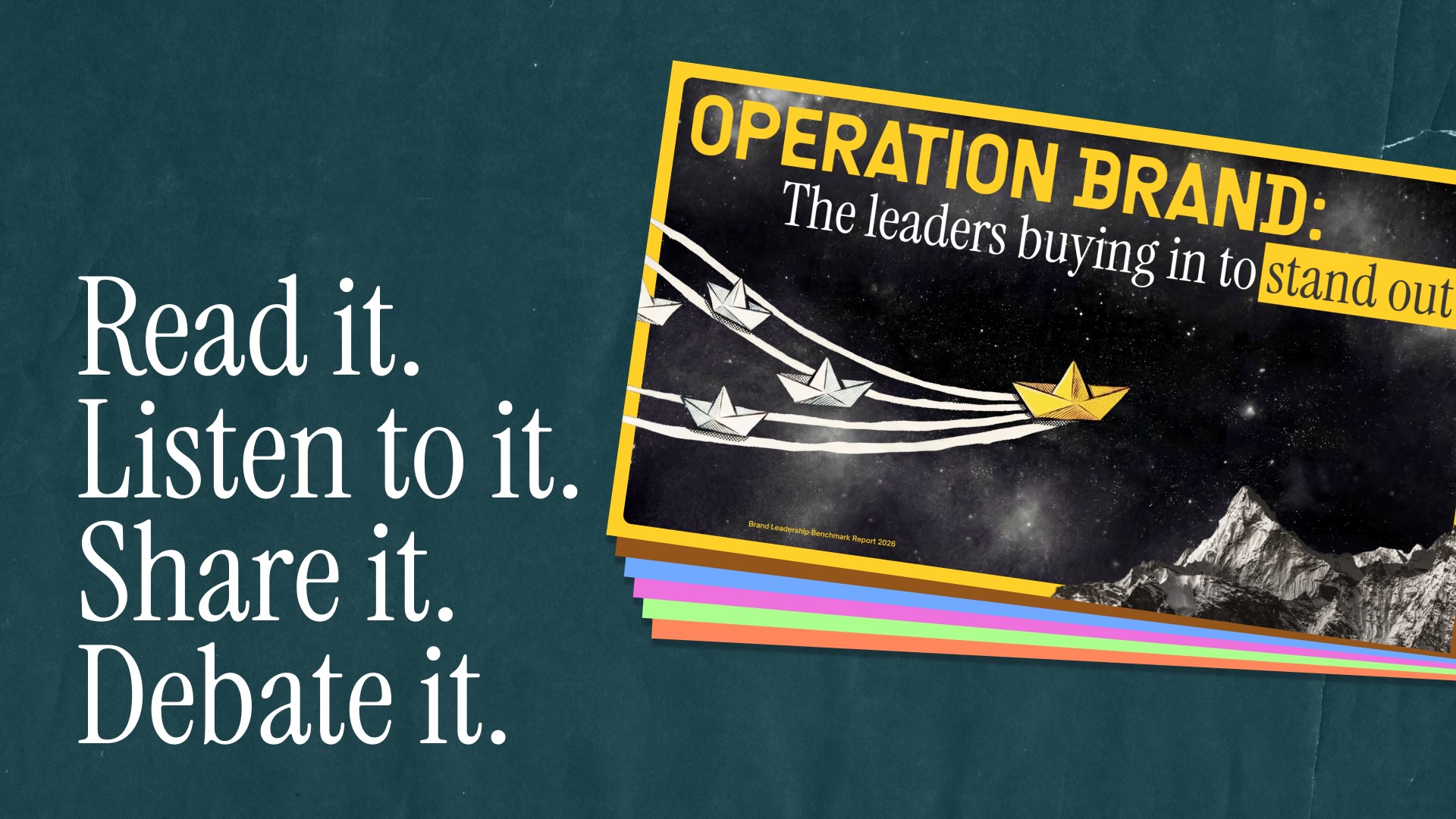
OPERATION BRAND: THE LEADERS BUYING IN TO STAND OUT is available to view here.
Register for FREE HERE and receive the Campaign Brief Daily Bulletin and/or the global Best Ads Best of the Week Bulletin. Subscribe to Campaign Brief Magazine.
#More Creative News #No paywalls #No annual membership fees
Subscribe to Portfolio & Reel for current listings of Australian and NZ ad agency and production company leadership and key personnel