Australia’s Post Production industry in 2026: Craft, AI and the New Production Pipeline
The Australian post production industry is entering a new phase of transformation, as the initial shock and experimentation surrounding artificial intelligence gives way to something more pragmatic: integration. Campaign Brief takes a closer look…
Over the past 12 months, AI has moved rapidly from talking point to working tool, finding its way into concept development, previs, animation, clean-up, compositing, grading and even the generation of complete shots. But while the technology dominates discussion, the broader story emerging from Australia’s post community is not simply about AI replacing established ways of working. Instead, it is about the collapse of traditional boundaries between production and post, the growing demand for speed and volume, and the increasing value of experienced creative judgement.
Budgets remain under pressure while deliverables continue to multiply. A campaign that might once have centred around a hero TVC and a handful of cutdowns can now stretch across social, digital, BVOD, OOH, retail and platform-specific executions. At the same time, agencies and brands continue to expect high production values and ambitious creative.
The result is an industry being asked to do considerably more with increasingly flexible resources.
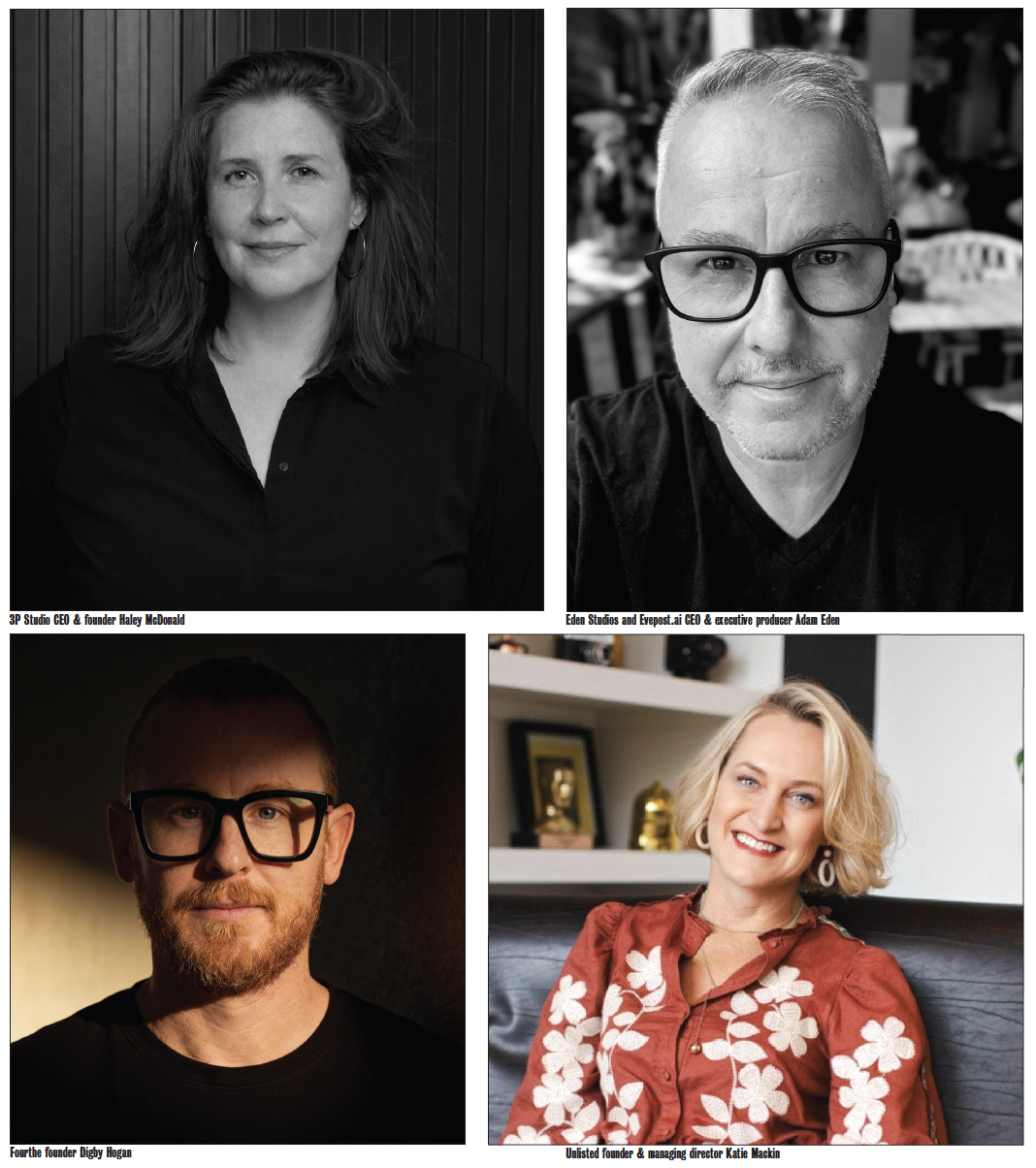
3P Studio CEO and founder Haley McDonald believes Australian post is in good creative shape yet under real commercial pressure. Says McDonald: “The biggest change over the past year is that post is no longer the last stop. We are being pulled into conversations at concept stage because clients need to know what is achievable, at what volume, before anything gets shot.”
She adds the other shift is scale: “A job that used to be one spot and a couple of cutdowns is now one master spot and 90 assets across six channels, on the same timeline. Studios that have solved delivery as a system rather than as overtime are the ones doing well.”
Unlisted founder and managing director Katie Mackin agrees the biggest shift is the volume of deliverables. Says Mackin: “Where we once delivered a handful of edits per campaign, we’re now routinely producing hundreds of versions from the same core asset. On one recent project alone, we delivered over 400 individual outputs. That kind of scale demands days of additional editing that most budgets simply weren’t built to absorb, and it’s exposing a structural gap between how campaigns are scoped and how they’re actually being delivered.”
For Adam Eden, CEO and executive producer at Eden Studios and Evepost.ai, the industry remains “relatively busy” but under significant pressure to evolve towards AI assistance. Says Eden: “The biggest change over the past year has been the speed and structure of delivery. Commercial clients are increasingly expecting more content, more versions and shorter turnarounds without a corresponding increase in budget. Instead of a traditional linear process — shoot, offline, approval, grade, VFX, sound and delivery – projects are becoming much more fluid. Editorial, VFX, colour, versioning and even production are overlapping.”
Digby Hogan, founder of Fourthe, sees a similar collapse of the conventional production pipeline: “The biggest shift is that post no longer waits its turn. Pre-production, production and post are collapsing into one continuous process, with proof of concept, previs and even final composite references being built before a camera rolls – across all mediums, not just VFX-specific pipelines. The studios thriving in this environment are production and post experts working as a single unit, embedded from brief to delivery.”
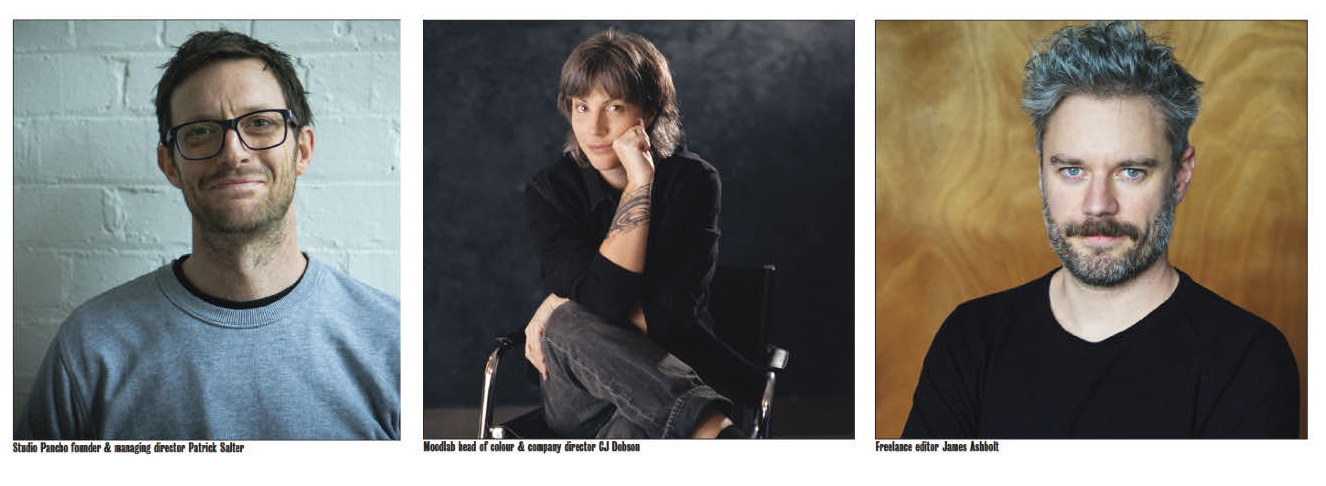
At Studio Pancho, founder and managing director Patrick Salter says AI is impossible to separate from any discussion about contemporary production, although the larger movement is around the increasingly demanding combination of speed, flexibility and volume. Says Salter: “Budgets keep tightening while the deliverables list keeps growing. What used to be one hero TVC is now social cutdowns, digital formats, OOH, verticals, platform specific versions and plenty of revisions. The old shoot, edit, VFX, grade and delivery pipeline isn’t really linear anymore. It’s messier, more fragmented and everything is happening at once.”
Moodlab head of colour and company director CJ Dobson, meanwhile, has seen some encouraging movement in the market. Says Dobson: “I feel like things have picked up over the past few months, though you could also attribute that to our newish business gaining traction. Another noticeable difference over the past year is that while there is still demand for remote sessions, we’ve seen a return to the grading suite with more and more people attending, which we love to see.”
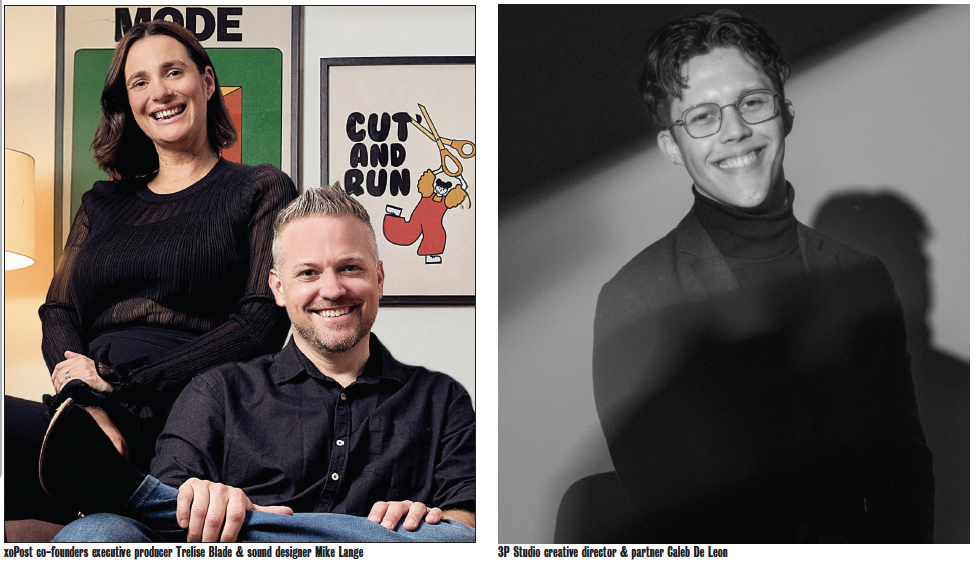
Trelise Blade, co-founder and executive producer, xoPost, adds: “Everyone is fighting harder for good work, but one of the things we’ve noticed most is how much people across the industry genuinely want to see each other succeed. That matters to us because it’s essentially what xoPost was built on – caring about the work and caring about the people making it.”
Craft in an age of speed
Despite the pressure for faster, leaner production, there is little suggestion that high-end craft is disappearing. If anything, post houses argue that the proliferation of technology is making taste, judgement and technical execution increasingly important.
Salter sees opportunity sitting between the two extremes: “There’s definitely demand for faster, leaner production, but that doesn’t mean craft has gone away. If anything, when a project genuinely needs VFX, 3D, animation or complex compositing, the expectations are higher than ever. Audiences are so visually literate now that ‘good enough’ can stick out for all the wrong reasons.”
Says McDonald: “The hero work is more ambitious than it has been in years because clients know that boundaries have come down due to AI, so we are seeing genuine appetite for more complex Hybrid AI – VFX and animation work. Everything below that has gone lean and systemised. The opportunity still sits heavily in the craft and taste that AI cannot replicate.”
Blade at xoPost is seeing faster, leaner executions, but a tighter budget can be a great creative constraint. “It becomes, ‘okay, where can we really make this sing?’ and sometimes that actually gives everyone a bit more freedom to have fun with the idea. We’re not here just to execute what comes through the door – good post should always add something, whether that’s in the edit, sound, grade or VFX.”
For Eden, the biggest opportunity is similarly in combining traditional expertise with emerging technology: “High-end compositing, VFX, grading and finishing are still incredibly important, but AI and generative tools are allowing us to create imagery and environments that previously would have required much larger budgets. But I don’t think that means traditional VFX or finishing becomes less important. In many ways it becomes more important.”
As generated imagery becomes ubiquitous, Eden expects craft itself to become a more visible differentiator: “As the volume of generated content increases, taste and craft become differentiators. A beautiful grade, subtle compositing, excellent sound design and attention to detail can make the difference between something that feels disposable and something that feels like a premium brand communication.”
Hogan says much of the everyday opportunity lies not in spectacular AI-generated films, but in using the technology to solve specific production problems. Says Hogan: “As much as we’d love to just be pitching on high-concept, million-dollar brand films, the majority of day-to-day work is more nuanced, execution-specific content – a shot here or a fix there. This is where AI excels, as a practical engine for problem-solving, pitching, and executing complex briefs. It elevates faster, leaner executions by making ambitious ideas viable under constraints that previously would have killed them.”
AI moves into the Pipeline
If 2025 was characterised by an industry trying to understand the implications of generative AI, 2026 is increasingly about working out where it belongs.
Freelance Editor James Ashbolt says the technology remains confronting for many practitioners but argues post professionals are particularly well positioned to harness it: “AI is certainly a scary topic for many in the industry. In its current state (in 2026) I feel we must lean into it rather than hide. Working in post production (already) gives us a huge head start as we already know to achieve the results the old-fashioned way. It does very much feel like a cheat code at times, but if it can make my visual effects quicker or enhance the edit to look more polished, it makes me better at my job.”
Ashbolt is already using AI for “audio clean up, temp voiceovers, set extension, re-lighting and upscaling video,” and remains “curiously optimistic” about where the technology is heading.
Eden is using AI across concept development, previs, environments, compositing, clean-up and image manipulation, as well as increasingly generating complete shots.
“It can also dramatically accelerate experimentation. Instead of spending a day developing one approach, you can explore ten ideas quickly and then decide which one deserves the time and craft to take further.”
But he identifies control and consistency as persistent limitations: “AI is starting to get better at consistency, but we do still get a few 6-fingered people and alien graphics from time to time!”
Over at 3P Studio, McDonald says: “We went all in on this rather than waiting to see what happened. Early last year we launched Adferno.ai as an AI creative lab inside the 3P Studio Group, built around AI pipelines that take the grind out of the process so directors and artists get their time back for ideation and craft. Alongside that I co-founded Neosframe.ai for creative rollout and automation, which takes a brief through to finished, channel-formatted, compliance-checked assets at scale. The principle we work to is simple: AI for production speed, proprietary software for brand control. The biggest opportunity is in versioning, localisation and iteration, where the volume is genuinely unsustainable by hand.”
At Moodlab, Dobson says AI is assisting colourists with specific tasks but is not yet dependable enough to take over established processes: “Our colour team is able to use AI to make simple mattes to isolate objects/people in the frame, however, the technology has a way to go before we can get perfect clean edges. We are also currently trying not to rely too heavily on this as it can be unstable. Hopefully this tech gets better and better so we have more control over the image.”
For Hogan, the technology’s greatest limitation is ultimately human: “Low barriers to entry have created a wave of AI-curious creators who might be really capable prompt generators, but have likely never delivered a client brief, end to end. True value comes when senior craftspeople apply these tools with discipline, and are able to navigate the thousands of invisible touchpoints that define a project’s success.”
Salter similarly argues that generating an impressive image is very different from creating a commercially usable campaign: “The limitations are still pretty obvious though. Consistency, continuity, art direction, staying on brand, getting things like geometry right and being able to repeat something reliably are all still difficult, especially across a multi shot TVC / campaign.”
He says one great frame doesn’t mean you’ve got a production-ready asset. “I think the industry is starting to realise AI doesn’t actually remove the complexity – it just moves it around.”
Blade says the tech is almost invisible now, which means her studio can build the team around the job rather than the other way around. “We can bring in the right people, wherever they are, and when there’s trust and good creative chemistry the whole process just flows better. The pipeline enables it, but ultimately, it’s the people who make the work kick ass.”
Animation in the AI era
Animation has found itself particularly exposed to both the possibilities and misconceptions surrounding generative AI.
Mackin at Unlisted says AI is the most significant innovation her studio has seen since the inception of computer-generated animation, and what’s already possible after such a short time is genuinely exciting.
Says Mackin: “Three years ago, we were writing custom LoRAs and building systems to apply animation styles to live action or existing assets. Now that same capability is out in the public domain. At Unlisted, we treat AI as a tool: something we reach for whenever it enhances our creative abilities or streamlines our pipeline. What excites me most is the freedom it’s given our most talented directors – the ability to fully explore their ideas without the schedule and budget limitations that used to hold them back.”
That said, animation stays hand conceived. “A unique, charming story or a compelling product film still needs a storyboard artist. A brand character still needs a specialised designer. Emotive character animation is still the work of a handful of genuinely gifted animators, and every story still needs the right director to bring it home. AI isn’t nuanced enough yet for us to trust it with the elements that make a film memorable rather than merely executed.”
Eden says AI has already affected speed, budgets and client expectations, allowing teams to explore concepts and environments faster and making ambitious animation viable on jobs that may previously have lacked sufficient budget.
The problem is the expectation that a compelling AI-generated clip translates automatically into a controllable campaign. Says Eden: “Generating an impressive five-second clip is one thing; delivering a 30- or 60-second piece with consistent characters, precise movement, product accuracy and the ability to respond to detailed client feedback is very different. AI is incredibly fast when you’re prepared to accept what it gives you, but less so when you need precise creative control.”
He says that’s where handcrafted animation continues to have enormous value: “Timing, performance, weight, character and storytelling still require judgement and craft.”
Hogan argues AI workflows can actually demand greater planning rather than less. “AI has compressed timelines and expanded client expectations around speed, but it hasn’t eliminated the need for traditional discipline. If anything, it’s the opposite – AI workflows require even more rigorous upfront planning to maintain creative control.”
Salter agrees the fundamentals of animation remain stubbornly human: “Animation is still about timing, performance, storytelling and design. Those are pretty hard things to automate convincingly. There’s still a real place for handcrafted animation when a brand needs a distinctive visual language, precise character performance, controlled movement or consistency across shots and a campaign.”
McDonald says client expectations have moved faster than the tools did: “We had a year of people assuming animation should now be quicker and cheaper across the board, and some of it genuinely is. Style frames, exploration, iterations have all sped up significantly. But handcrafted animation still wins wherever character, timing and a brand-owned design language matter, because that is craft and taste, not AI. Timelines have tightened more and budgets have dropped, and the smartest clients are reinvesting the time we save back into the work rather than the roll out.”
The new production pipeline
Remote work may have been one of the defining post production conversations of the pandemic era, but in 2026 it has largely disappeared as a novelty. It is simply infrastructure.
Ashbolt says Australian internet speeds remain a limitation to the full potential of cloud systems, although remote collaboration itself has become routine: “Post Covid, we are all now experts in remote work. Presenting to a production team interstate is now easily done with a simple Louper subscription or even for free using editing software such as Davinci Resolve.”
Adds McDonald: “Cloud and remote collaboration are completely standard now, to the point where they are boring, which is exactly what you want from infrastructure. Having offices across Brisbane, Sydney and Auckland remote collaboration is a staple of our business.”
Eden agrees that cloud and remote collaboration are now standard: “The biggest change is how connected the entire production pipeline has become. Editors, VFX artists, colourists, producers, agencies and clients can collaborate throughout the process rather than working through separate stages.”
He says this has created faster, more flexible, workflows and allows studios to bring in specialist talent wherever they are located. “The challenge is maintaining strong communication and creative direction, because technology makes collaboration easier, but it doesn’t replace good creative relationships.”
Hogan describes hybrid production and integrated workflows as “the baseline infrastructure of modern production”.
Fourthe has developed what it calls “virtual pickups”, working as an extension of production companies’ camera departments on shots that would otherwise be logistically disruptive or prohibitively expensive: “By matching the exact camera package, lens profiles, and colour treatment of the live shoot, we deliver clean, high-resolution virtual pickup shots ready to drop straight into the existing online pipeline.”
Dobson would like integrated remote workflows to extend further into commercial production.
“We offer a cloud dailies service that I think could be super useful for commercials and means the offline media has a ‘look’ applied before and/or during the edit.”
Salter says the real development is no longer remote collaboration itself, but the way traditionally separate disciplines can operate simultaneously: “Design, animation, VFX, editing, review and delivery can all happen much more in parallel. That means teams don’t have to wait for one department to finish before the next one starts.”
The hybrid artist
As workflows converge, the skill set demanded of artists is changing with them.
For Ashbolt, lower-budget productions are already collapsing jobs that would traditionally have been handled by individual specialists: “During post production (on a TVC for example) there’s always been a strong distinction between editing stages. Offline editing, colour grading and online finishing. There’s usually a talented specialist for each stage. This works very well on most high level productions, but on lower budget projects it’s common to see all of it being done by one artist.”
Eden nominates adaptability as the most valuable future skill, while emphasising that fundamentals remain essential: “Strong creative fundamentals in editing, VFX, colour, finishing and animation remain essential, but artists also need to understand how AI and emerging technologies can enhance their work.”
Hogan places equal weight on interpersonal experience: “The most valuable artists today aren’t just tool-literate; they possess deep traditional discipline and an ability to read a room and manage different personalities and stakeholders. Nothing can replace learned and earned on-the-job experience.”
For Dobson, adaptability is particularly valuable in a smaller operation: “We’re very much a ‘scale as you need’ business. We have a small core team and work with contractors and vendors when required. Within a smaller business, we’re always looking to work with people who are adaptable.”
Salter sees the modern artist becoming increasingly hybrid: “A motion designer who understands 3D, an animator who understands compositing, or a VFX artist who understands the creative brief can solve problems much earlier.”
He says creative technology is also becoming a much bigger part of the toolkit. “Unreal, Houdini, procedural workflows, AI tools and real-time systems are all becoming part of the modern artist’s skill set.”
Ultimately, he argues, technology alone is not the differentiator: “The best people aren’t necessarily the ones who know one thing inside out. They’re the ones who can connect a lot of different things together – and still know when something actually looks good.”
Looking ahead
The next 12 months promise another period of rapid change, but the consensus across the industry is striking: the opportunity is not AI in isolation, but the meeting point between technology and established craft.
3P Studio creative director and partner Caleb De Leon says AI is inescapable in conversation: “At 3P, we’ve taken a really optimistic perspective towards it, challenging ourselves to ask ‘how’ can we use it to push creative and technical expectations on our work. It’s made me think a lot about the tectonic shift circa 2014 where we saw agencies taking production in-house; production getting editors directly – it really disrupted the status quo and was driven a lot by shrinking budgets and growing expectations.”
He has a similar feeling now about the advent of AI, being pushed to meet shrinking budgets and growing expectations in 2026: “I think that’s the challenge, but the opportunity that presents itself is that there’s a bigger appetite than ever for bold creative and craft. I always think about Tim Minchin’s definition of art being, ‘ideas with effort’. I’m paraphrasing, but I think in a world of ‘good enough’ and art speaks differently and audiences are rewarding ‘ideas with effort’.”
Eden believes Australian studios can use that convergence to compete internationally and achieve production values that previously demanded significantly larger budgets. Says Eden: “The companies that succeed will be those that embrace new technology while continuing to invest in talent, creative thinking and high-quality execution. Ultimately, technology will keep changing, but great ideas and great craft will remain valuable.”
Hogan sees hybrid workflows creating enormous opportunity for scale, speed and creative scope. But as generative tools become ubiquitous, he expects the market to become saturated with mediocre AI output.
For Dobson, the ambition is simple: “To state the obvious, the goal would be to integrate AI into our workflows to expand possibilities rather than remove livelihoods.”
And Salter believes the industry’s greatest opportunity and greatest challenge may ultimately be two sides of the same technological shift: “Australia has a pretty amazing pool of creative and technical talent. Add AI, real-time engines, procedural workflows and better production tech into that mix, and small Australian teams can do some pretty big things.”
He says the biggest challenge is everything starting to look the same: “So, I think creative judgement becomes even more important. Having the tools is one thing. Knowing what to make with them is another. The studios that do well will be the ones that can make something people actually want to look at – not just make it faster.”
The Work
That emphasis on craft, collaboration and problem-solving is also reflected in the work contributors to this report nominated as standing out over the past year.
For Eden, standout work included Suntory Boss Iced Coffee, The Australian Newscorp and Primo Lunch With Punch, spanning production through Eden Studios and post/VFX through Eden Studios and Evepost.ai.
Hogan looked beyond Fourthe’s own output to nominate three pieces he believes demonstrate where contemporary post can excel: Jeep’s ‘Tyre Story’, GENER8ION & Yung Lean’s ‘Storm’ and Adidas’ ‘Backyard Legends’. Of ‘Tyre Story’, he said: “It stands out as a benchmark for AI-driven creative de-risking. It took an unproduced script that spent years on the shelf because, as Stellantis CMO Olivier Francois noted, the budget for a commercial about a 17-inch tyre couldn’t be justified under traditional models. By leveraging generative AI alongside traditional post-production discipline, it proved that ambitious, off the shelf ideas can be brought to market quickly without sacrificing commercial polish.”
Moodlab’s Dobson nominated Slather’s ‘The Sun is not your friend’, Seek’s ‘The wrong hire can cost small businesses big’ and a campaign for MyerOne. On the latter, she said: “This campaign had such a lovely look and feel to it. It sometimes is the case when so much of one colour fills the frame that it can take some exploration to find the right tone to work across all mediums and ensure that everyone up the chain is happy. To balance our schedule, I spent the first day setting the look and workshopping options, before handing it to Daniel Witt to see the project through to the end. A good team effort and a beautiful result.”
For Pancho, Salter says the variety of work itself has been a highlight, with the studio working across cinema, broadcast, government, motion branding, OOH and CGI. “Some of the most interesting work has been where we’re brought in early and get to have a proper conversation with the client or production team about how to make the idea work, rather than just being handed something to finish.” He points to VMO as one example, combining 3D, motion design and VFX across a large number of screens and formats, alongside ongoing work with returning entertainment clients including Endemol Shine. “For us, that’s probably what makes a project stand out these days. It’s not necessarily how big the budget is or how complicated the VFX is. It’s working with good people, solving interesting problems and making something that actually works.”
Mackin at Unlisted nominated several standout projects: For RACQ, the studio used generative tools to bring brand characters Reg and Sam into a 20-film campaign set across distinct Queensland environments. A custom AI pipeline kept the characters consistent in look, performance, lighting and compositing, with a second batch of 20 films due at the end of 2026.
Unlisted also delivered BMF’s first TVC for Western Sydney University, combining animation, live action, archive and stock footage, with AI supplementing source material. The approach helped the team respond quickly to changes and deliver a premium 30-second spot across online video, broadcast and cinema in five weeks.
For Cadillac, Unlisted combined 2D ink-and-gold painted environments, a fully CG car and live action with celebrity talent. The R&D team optimised renders and built a parallel 2D/3D pipeline to deliver the 60-second film in four weeks for launch.
For De Leon at 3P Studio, standout work included Super Members Council’s ‘Golden Goose’ with Thinkerbell and MOFA. He says the project was driven by a strong creative idea and a highly collaborative process with director Jae Morrison, Garret Fitzgerald and the Thinkerbell team, while also allowing 3P to push further into hybrid AI visual effects. That momentum continued with ‘Compliance Cassowary’ for Visibl with Cocogun, which used new production and post-production approaches to challenge what could be achieved within the timeframe and budget. De Leon also points to an unreleased brand piece led by 3P’s Bradley Coomber, where traditional motion design and AI tools are being combined in ways that reflect what he sees as the studio’s defining theme for 2026: renewed excitement around craft.
For xoPost’s Blade, standout work included Norco’s ‘Granny’, made with Christy Peacock, Friends & Allies and director Mitch Kennedy, with xoPost handling post end to end. Blade says the strong idea, beautiful imagery and smooth collaboration helped the final commercial deliver on its pitch-stage promise, earning a strong response from Norco’s marketing team. Another highlight was Finally, A Show About Men!, the five-part animated comedy from Samuel Leighton-Dore and Sad Man Studio, with Hayley Dell leading sound design at xoPost. Each episode demanded a distinct sonic world, moving from surreal and emotional to deadpan and absurd. Blade also nominates xoPost’s most personal project: building its new sound studios from scratch in eight weeks. The purpose-built booths, vision suites, art, lounges and production room were designed to feel unmistakably like xoPost – even if, she jokes, Mike’s blood, sweat and tears are still somewhere in the server room.

VIEW THE PRINT MAGAZINE + PAST ISSUES ONLINE. SUBSCRIBE NOW.
Register for FREE HERE and receive the Campaign Brief Daily Bulletin and/or the global Best Ads Best of the Week Bulletin. Subscribe to Campaign Brief Magazine.
#More Creative News #No paywalls #No annual membership fees
Subscribe to Portfolio & Reel for current listings of Australian and NZ ad agency and production company leadership and key personnel