
Miroma Project Factory develops behavioural-change health app to help prevent Type 2 diabetes
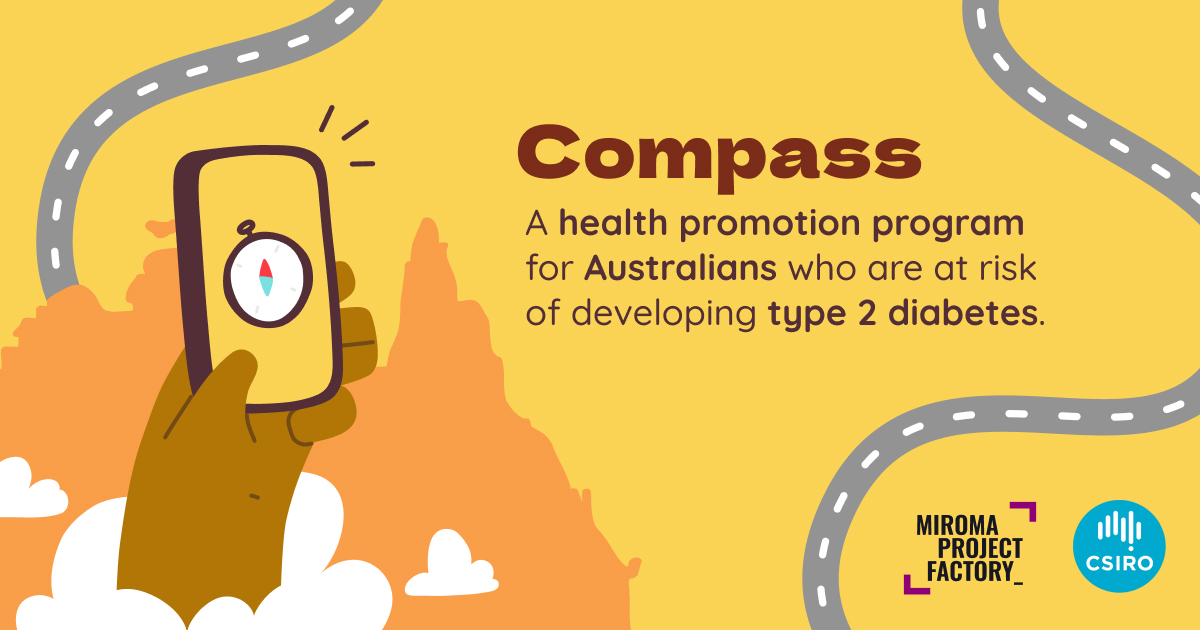
Approximately 1 million Australian adults have Type 2 diabetes and it is estimated over 2 million people are pre-diabetic or are at high risk of developing the disease. Miroma Project Factory (MPF) recently collaborated with leading government scientists and researchers to develop a 12-week health program for Australians at risk of developing Type 2 Diabetes.
The Compass app was created through an extensive co-design process with a group of target users. They wanted this to be game-like, but not a game; to be strongly based on Australian iconography; to build in information and learning as a key deliverable and to be engaging, accessible, and trustworthy. They wanted to see their progress as a ‘journey’ and be given challenges to show their resilience – all with the aim of increasing their knowledge as a foundation to changing their behaviour.
As the leaders in behavioural change, MPF ensured that Compass used proven techniques and scientifically validated data to help users increase their ‘health literacy’ and adopt healthier habits around physical activity and eating. Each day of each week, there were missions, represented as stepping stones on the journey, to complete.
Says Glen Wong, Head of Production, MPF: “From the start, it was a real partnership to achieve a common goal. They were really receptive to our ideas, actively participated in the development of the app and gave us great feedback. We’re thrilled with the results and can see how this can be repurposed in many different ways for various kinds of good.”
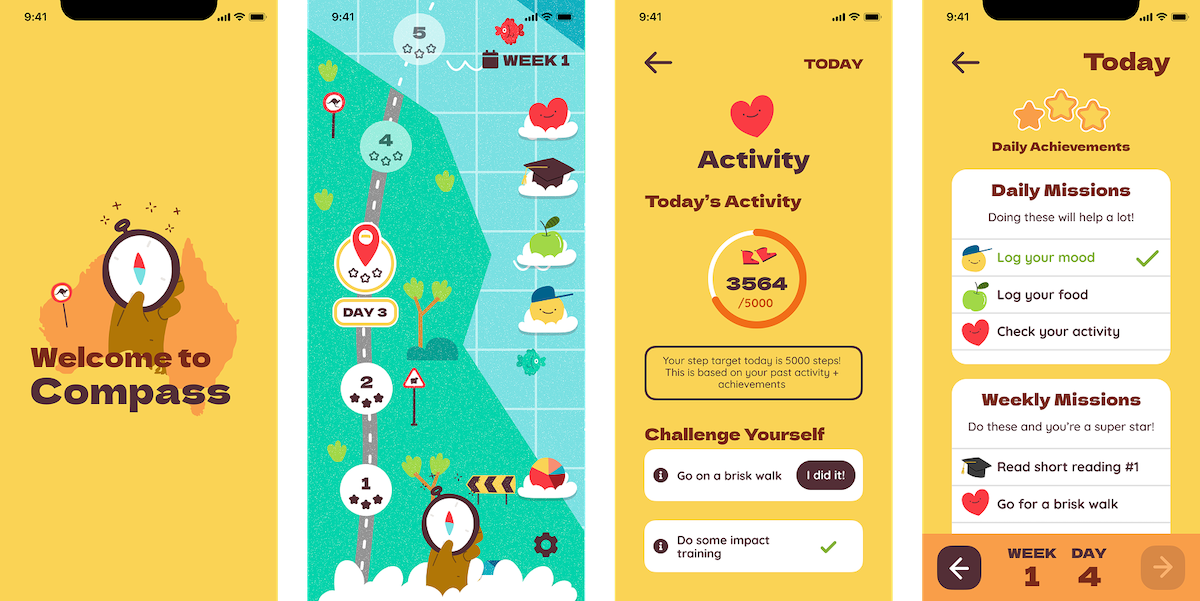
The app uses the device’s built-in health tracker, including wearables, to record a user’s step count in order to track their activity and display progress throughout the program.
Compass users were encouraged to log their mood each day and to undertake targeted improvements related to their levels of physical activity, nutrition and diet, as well as increase their health literacy and general health awareness. These were represented back to them in playful graphs, and they could see how they progressed from a human perspective – for example, their steps were represented as a journey around Australia.
Based on their identified activities, Compass gave them options to adjust their actions using cognitive behavioural change techniques. This helped the app to have a stronger effect on people and develop more long-lasting change.
The app was part of a closed trial and included over 300 users. Post-trial feedback was incredibly positive about the app, and all users felt that the encouragement and gamified nature increased their compliance, enjoyment and participation.
Register for FREE HERE and receive the Campaign Brief Daily Bulletin and/or the global Best Ads Best of the Week Bulletin. Subscribe to Campaign Brief Magazine.
#More Creative News #No paywalls #No annual membership fees
Subscribe to Portfolio & Reel for current listings of Australian and NZ ad agency and production company leadership and key personnel