David Vale: Production is Creative – How Collaborative Departments Deliver Better Work
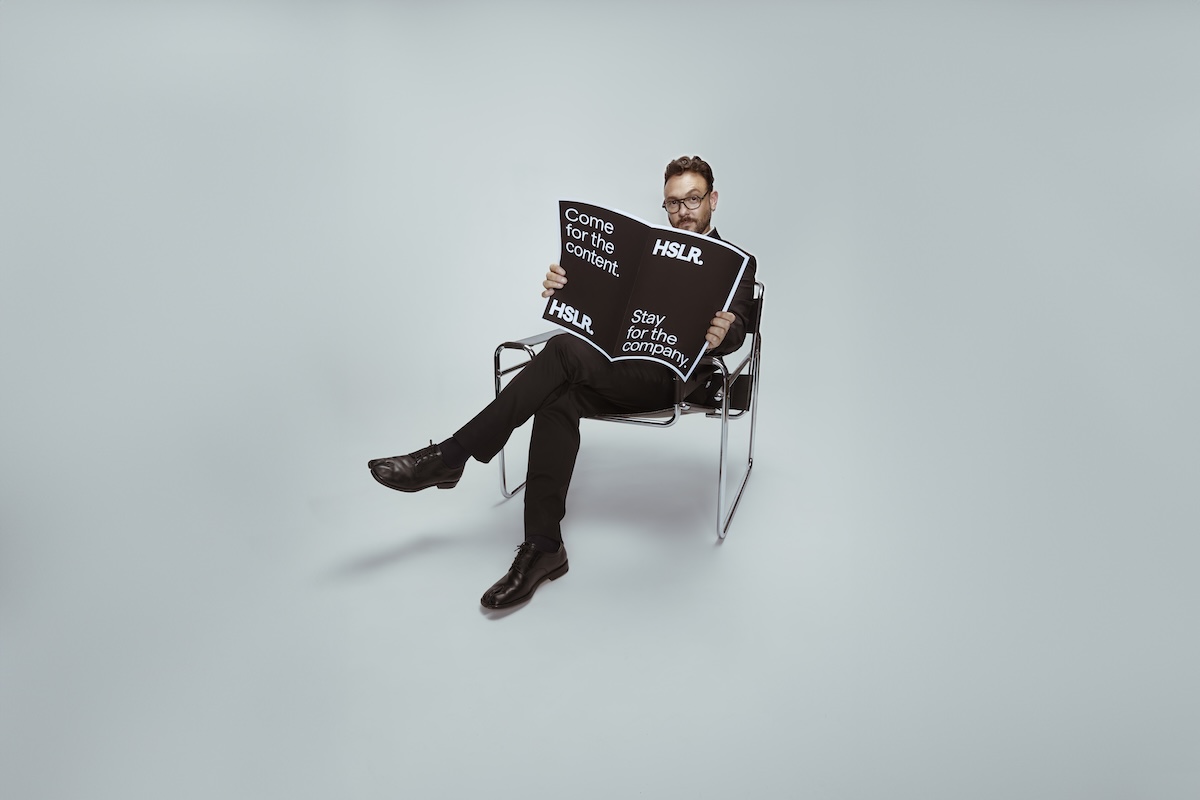
By David Vale – Managing Director & Founder: HSLR Creative Productions
Once upon a time, creatives and producers worked separately, they sat in different departments, often across entirely different businesses. Today, it doesn’t just help to brief production alongside creative, a shared understanding of techniques, budgets and deliverables is necessary for developing ideas that make it past the concept phase. And, after 11 years of business, this theory continues to ring true at HSLR.
Our teams work side-by-side to ensure every brilliant idea is actually executable within the client’s budget, while supporting their business aspirations and brand strategy. We do this because too often an excellent idea falls down in its execution. By making production an inherent part of the creative process, we’re safeguarding the integrity of all outputs so that every asset – regardless of whether it’s the brand TVC or a static OOH ad – hits hard, and here’s why:
Too little, too late.
We’ve seen it all before. Creative has come up with an exceptional idea, the clients loved it, and the project is being pitched out for production. Swept up by the potential of it all, few have had the chance to gauge whether this concept can feasibly be captured within budget, with integrity to the original idea. And so, a production partner is appointed and faced with the dilemma of bringing the concept to life on a shoestring – cutting back on important elements, or dialling down the quality of certain outputs to make it happen. It’s all too common, but it doesn’t have to be this way. When production is briefed in from the beginning, both they and the creative department are able to employ more strategic production techniques to capture all assets, without compromising on quality.
Every output has a job to do.
Whether it’s TVC, OOH, BVOD, digital ads, or social advertising, creating content for content’s sake is no longer enough to keep the lights on. While the pressure to publish often drives clients to jump the gun, briefing production alongside creative actually saves time, tears and thousands in the long run. Because we know that every channel contributes to a brand’s marketing strategy, we approach each brief with the full context in mind. We consider what the brand is doing on social, what’s live in market across OOH, and what messaging is running on BVOD. Multi-platform marketing is less about resizing the key visual for all outputs, and more about developing integrated assets that support the holistic campaign and are fit-for-platform.
Proof of concept.
An example of an integrated approach can be seen in our recent work on the Petaluma brand platform for Vinarchy. Both the hero film and social activity carries the same production quality, but acts differently based on the etiquette and expectations of each platform. When Vinarchy brought us in during the creative briefing phase and applied this macro approach to their upcoming campaigns, we found that feedback rounds were reduced during the ideation phase, and production efficiencies were identified from the very beginning, helping us to push every dollar further during the rollout.
So, how might clients, brands and agencies put this theory to the test?
With Q3 just around the corner, here are a few ways that our clients and agency partners can start applying this strategy to upcoming activities:
● Production built into your creative process
So often production is viewed as this separate thing that comes long after creative ideation. When briefed simultaneously, a creative production partner can help you develop a holistic approach to support your creative and business goals while making, not breaking, your budget.
● Creative streamlined by production
What if production could streamline your creative for the whole year? Briefing a production partner ahead of 2026 might help you consolidate spend and boost outputs before the summer break even begins. This approach is particularly useful for building long-term narratives that reinforce brand salience and storytelling.
● Get ahead of the feed.
If you haven’t already briefed creative for your 2026 content, now might be a good time to start integrating production within your briefing process so that efficiencies can be considered from the get go and adjusted for maximum effectiveness throughout.
Strategic takeaways
● Briefed during the creative phase, a production partner can better understand your business goals, audience and industry, supporting an approach that upholds all three.
● Production partners can help maintain creative integrity when involved alongside ideation, keeping outputs consistent, purposeful and fit-for-platform throughout.
● An idea is only as effective as the team that executes it. A collaborative production partner can help you realise your concept, as intended, when briefed collectively.
Already, we know that some of our best creative thinkers boldly blur the boundaries between creative and production. Granted, their experience within the industry has earned them these learnings. But perhaps actively incorporating this process into the ways we work today might actually give the next generation of marketers an advantage; one that foregoes the unspoken politics of title in favour of the work.
To learn more, visit HSLR.com.au